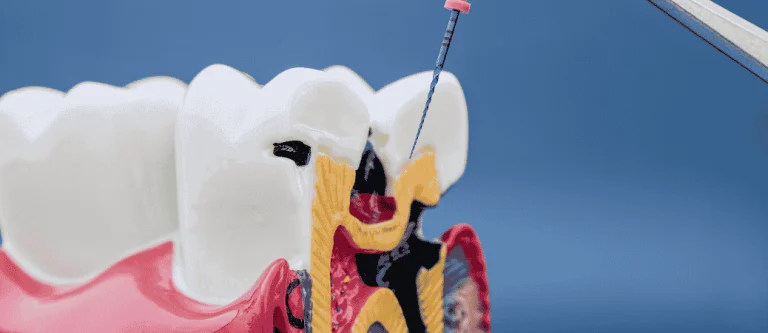

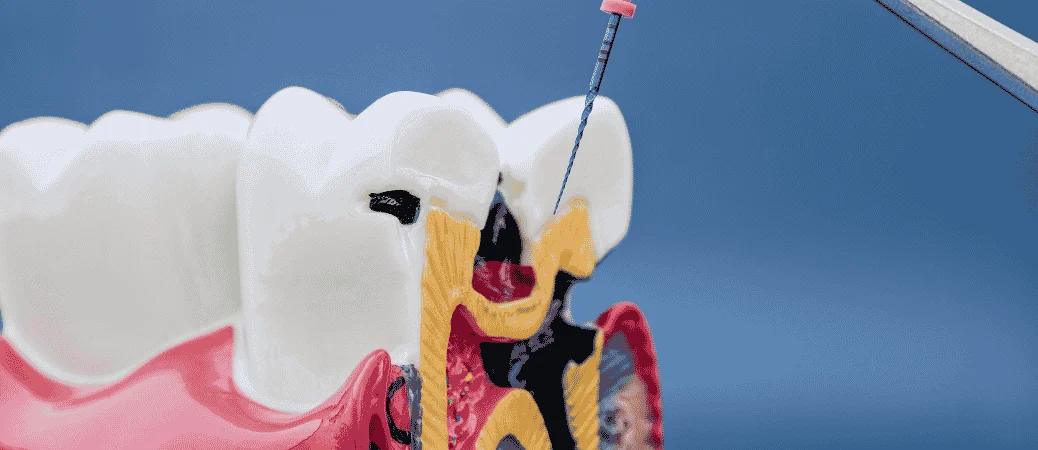
Having a root canal recommended without pain can leave you wondering whether treatment is really necessary.
A dental X-ray may support the recommendation by showing bone changes at the root tip, deep decay near the pulp, or widening around the root’s supporting ligament.
Your dentist needs to evaluate these findings alongside an examination and pulp tests before deciding whether root canal treatment is necessary.
You deserve a clear explanation when a comfortable tooth needs attention. Tooth pain gives useful clues, but a damaged or infected tooth sometimes stays quiet after the tissue inside it loses nerve function.
You also deserve to know how certain the diagnosis is. A dark spot alone does not establish an abscess, and a deep cavity does not automatically require a root canal.
What Findings on an X-Ray May Support Treatment?
Your dental X-rays help identify damage inside your tooth and changes in the surrounding bone. Digital X-rays make those details easier to enlarge, but diagnostic imaging still needs clinical interpretation.
What Does a Dark Area at the Root Tip Mean?
A dark area near your root tip shows that the area allows more X-rays through than nearby dense bone. Your dentist might call this a periapical lesion, meaning an abnormal area around the end of the root.
When your pulp tests indicate dead tissue, that finding supports inflammation caused by infection within the tooth. Bone loss develops as your body responds to irritation leaving the root canal system.
You cannot identify a dental abscess from the dark area alone. Similar appearances occur with other conditions, and an X-ray cannot reliably distinguish every abscess, cyst, or other root-tip lesion.
How Do Deep Decay and Ligament Changes Inform the Diagnosis?
Deep tooth decay on your X-ray shows how close damage extends toward the pulp, the soft tissue containing nerves and blood vessels. Because cavities sometimes cause no pain, your comfort does not reveal their depth.
Your dentist also checks the narrow space around each root. Widening of this periodontal ligament space suggests stress or inflammation, which has several possible causes, including bite overload and infection.
You need pulp testing to help separate those causes. Deep decay or ligament widening by itself leaves important questions about your tooth’s health unanswered.
What Can Dental X-Rays Miss or Misrepresent?
Your X-ray provides a flat view of three-dimensional structures. Overlapping roots, nearby anatomy, and the angle of the image sometimes hide a problem or create a misleading shadow.
Early disease inside your tooth can exist before visible bone changes develop. Fine cracks also frequently escape conventional imaging.
You should ask your dentist to identify the exact finding and explain whether another image angle would clarify it. An older X-ray is useful for checking whether the area has changed.
Why Can an Infected Tooth Feel Normal?
An infected tooth can feel comfortable after its pulp loses nerve function or when drainage limits pressure around the root.
Regular dental cleanings and exams help your dentist identify dental concerns that may not cause noticeable symptoms.
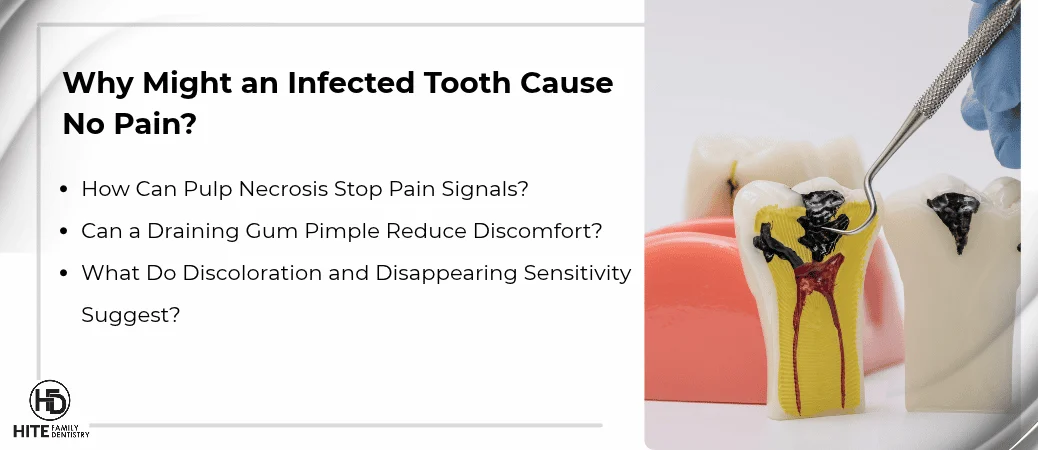
How Can Pulp Necrosis Stop Pain Signals?
Your tooth nerve is part of the pulp tissue inside the tooth. With pulp necrosis, that tissue dies and loses its ability to respond normally.
If bacteria remain inside your root canals, a pulp infection persists despite the loss of pain signals. The living tissues around the root still respond to that infection, sometimes with little noticeable discomfort.
You might remember earlier pain, an injury, or a large filling. That history helps your dentist interpret why your tooth now feels quiet.
Can a Draining Gum Pimple Reduce Discomfort?
A gum pimple near your tooth sometimes marks the opening of a drainage tract from an infection. When fluid drains through that opening, pressure decreases and your discomfort can ease.
You still need the cause identified. The opening might sit some distance from the responsible tooth, so its position alone does not identify which tooth needs treatment.
Tell your dentist if the bump comes and goes or leaves a bad taste. Avoid squeezing it, even if drainage seems to bring relief.
What Do Discoloration and Disappearing Sensitivity Suggest?
Your tooth discoloration deserves attention, especially when one tooth darkens after an injury. Internal changes from damaged pulp are one possible explanation; staining and restorative materials are other possibilities.
If your tooth pain comes and goes, describe the full pattern, including sensitivity that stopped. The disappearance of tooth sensitivity after a painful period sometimes signals loss of pulp function.
You cannot confirm that change by testing your tooth at home. A professional comparison with nearby teeth provides more useful information.
How Does a Dentist Confirm the Diagnosis?
Your diagnosis should bring together your dental history, examination, pulp responses, and imaging. Before endodontic treatment, you also need an assessment of whether your tooth is strong enough to restore.
What Do Cold and Electric Pulp Tests Reveal?
During a cold test, you report whether you feel the stimulus and how long the feeling lasts. Your dentist compares that response with nearby teeth.
An electric pulp test checks whether your tooth’s nerves respond to a controlled stimulus. These tests measure nerve response; they do not directly measure blood flow or reveal the exact condition of every part of the pulp.
A missing response supports pulp necrosis when other findings agree. Your results need extra care after recent trauma or when a crown or calcification interferes with testing.
How Do Bite Tests, Gum Probing, and Examination Help?
Your dentist checks for a cracked tooth using biting pressure and careful inspection, sometimes with magnification or light passed through the tooth.
Tenderness during tapping points toward irritation in the tissues around your root.
Gum probing measures the spaces between your teeth and gums. A narrow, deep pocket raises different concerns from the broader pattern of bone loss associated with gum disease or periodontitis.
Your dentist also considers other explanations when the findings do not match. For upper back teeth, the distinction between sinus pressure and tooth pain sometimes needs attention before treatment.
When Is Specialist Assessment or Additional Imaging Useful?
You benefit from an endodontist’s assessment when test results conflict, a crack is suspected, or previous root canal treatment complicates the picture.
An endodontist is a dentist with advanced training in diagnosing and treating pulp and root-related problems.
A limited-field cone beam CT scan provides three-dimensional detail in selected cases. Therefore, advanced dental technology, including cone beam 3D imaging, can help the dental team evaluate complex dental concerns.
When Is a Root Canal the Right Treatment?
Root canal treatment is appropriate when your tooth has pulp disease that requires removal of the affected tissue and your tooth remains restorable. Your treatment plan should explain the diagnosis and the expected benefit of saving the tooth.

When Might a Filling, Pulp Treatment, or Monitoring Be Appropriate?
If your pulp remains healthy or has irritation expected to recover, removing decay and restoring your tooth with a dental filling might be enough. The depth of a cavity helps guide care, but it does not settle the treatment choice.
In selected teeth with living pulp, treatment that protects or preserves some pulp tissue is an option. Your suitability depends on the clinical findings and the dentist’s assessment of the tissue.
Monitoring fits certain uncertain findings when your examination supports it. You need a defined follow-up plan with repeat testing or imaging; a confirmed infection inside dead pulp calls for treatment.
What Should You Ask Before Agreeing to Treatment?
You should leave the discussion knowing which tooth needs care and what evidence supports the recommendation. Useful questions include:
- What is your diagnosis for the pulp and the tissues around the root?
- Which X-ray finding supports that diagnosis?
- How did my tooth respond to pulp tests?
- What treatment alternatives are appropriate based on my test results?
- How urgent is treatment, and what changes require an earlier call?
- What restoration will my tooth need afterward?
You can also ask about the expected outlook and the full treatment cost, including the final restoration. Your provider can give a pre-treatment estimate and explain available financing and payment options before you begin care.
If uncertainty remains, request clarification or a second opinion before scheduling an irreversible procedure.
What Does the Procedure Involve, and When Is Extraction Considered?
During your root canal treatment, your dentist uses local anesthetic and isolates the tooth with a protective dental dam.
Your root canal procedure involves removing affected pulp, cleaning and disinfecting the canals, then filling and sealing them.
You then need a lasting restoration to protect the treated tooth. A crown is commonly recommended for back teeth or teeth with substantial structural loss.
In suitable cases, same-day CEREC crowns can help restore the tooth’s strength, shape, and function in a single appointment.
When you consider root canal treatment versus tooth extraction, the amount of sound tooth and bone support helps guide the choice.
Tooth extraction deserves consideration for a vertical root fracture, damage that prevents a lasting restoration, or a poor long-term outlook.
What Are the Risks of Delaying a Confirmed Infection?
Delaying care for your confirmed tooth infection leaves the cause in place and creates a risk of further bone damage or a painful flare-up. Your dentist should recommend timing based on your findings and medical health.
How Can Untreated Infection Affect Bone and Tooth Survival?
Inflammation around your root can continue to damage nearby bone while your tooth feels comfortable. Progression raises the risk of a dental abscess and complicates efforts to preserve your tooth.
Tooth loss is a possible outcome when damage becomes too extensive. Successful treatment often allows the surrounding bone to heal, though your outlook depends on the condition of the tooth and its support.
If you are considering putting off recommended dental care, ask for a specific treatment timeframe. Antibiotics alone do not remove infected tissue from inside your root canal system.
Which Symptoms Need Urgent or Emergency Care?
You need prompt dental attention for new swelling, drainage, worsening pain, or fever with dental symptoms. Contact your dentist for emergency dental care and describe how quickly the symptoms are changing.
Seek emergency medical care immediately if you have trouble breathing or swallowing, swelling near your eye or neck, or rapidly spreading facial swelling. Call 911 if breathing is affected.
Tell your dental team if you have a weakened immune system. Your medical history affects how quickly an infection needs assessment and how your care is planned.
Base Your Decision on the Evidence, Not Pain Alone
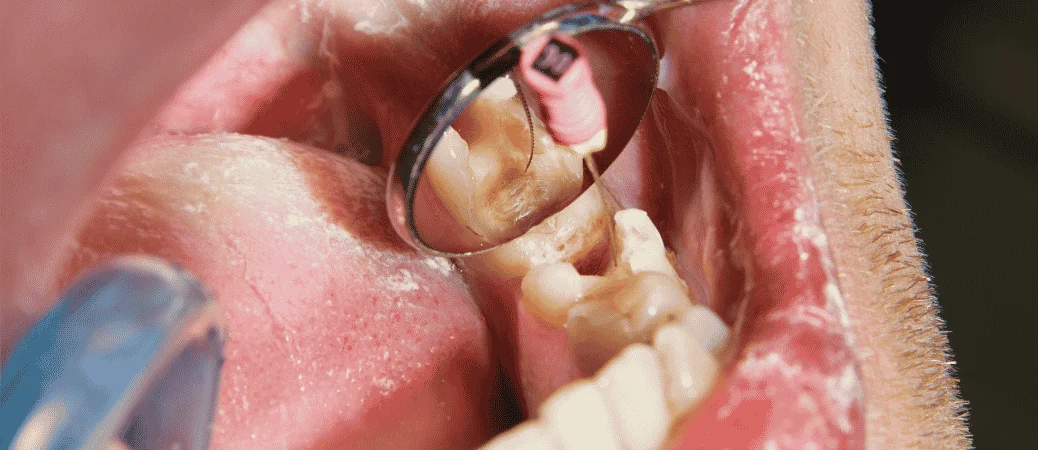
Your decision about root canal treatment should rest on a clear diagnosis supported by imaging and clinical tests.
A comfortable tooth deserves treatment when those findings confirm disease; an uncertain finding deserves further evaluation.
At Hite Family Dentistry, you can ask to review your X-ray and discuss the test results before agreeing to care. Confirm your alternatives, the recommended timing, and the restoration needed to protect your tooth and oral health afterward.
Frequently Asked Questions
You can use these answers to clarify common concerns before discussing your own findings with your dentist.
Can a dentist tell I need a root canal from an X-ray alone?
Your dental X-ray alone usually cannot establish the full diagnosis. Your dentist combines it with pulp testing and an examination, especially when your tooth feels normal.
Does every dark spot on a dental X-ray mean infection?
A dark spot on your dental X-ray has several possible explanations, including normal anatomy or a change unrelated to pulp infection. Your dentist needs to check its location and compare it with your clinical findings.
How do I know whether I need a root canal or just a crown?
Your pulp health determines whether root canal treatment is needed, while the strength of your remaining tooth helps determine whether you need a crown. You might need either treatment or both; a crown does not clear an infection inside your root canals.
Can a failed root canal show on an X-ray even without pain?
Persistent or new bone changes around your treated tooth can signal a problem even without pain. Your dentist should compare earlier images because healing tissue and a slowly resolving lesion also affect the appearance.
Will a root canal hurt if my tooth does not hurt now?
Your dentist uses local anesthetic to control discomfort during root canal treatment, even when your tooth starts out painless. Tell your dentist immediately if you feel pain during treatment, and ask what soreness to expect afterward.