


Tooth pain that flashes up and then disappears can leave you wondering if something is seriously wrong. You bite down on food and feel a sharp jolt, or you sip cold water and wince, but then the discomfort fades away.
This pattern might trick you into thinking the problem has fixed itself, but intermittent tooth pain usually signals an underlying dental issue that needs attention.
Tooth pain that comes and goes can point to cavities, cracked teeth, infections, or even gum disease, and ignoring these symptoms often leads to more serious problems down the road.
The pain might seem manageable now, but small cracks can deepen, decay can spread to your tooth’s nerve, and gum diseases can flare up into bigger concerns.
Understanding what causes your toothache to appear and vanish helps you know when to see a dentist and what treatment you might need.
This article breaks down the most common reasons for pain that keeps coming back. You’ll learn how to spot the difference between a cavity, a crack, and nerve damage, plus what your dentist will do to figure out the exact cause and fix it.
Key Takeaways
- Tooth pain that appears and disappears often means you have decay, a crack, gum disease, or nerve irritation that needs dental care
- Early treatment prevents simple problems from turning into root canals, abscesses, or tooth loss
- Dentists use exams and X-rays to find the cause and offer treatments ranging from fillings to crowns or gum therapy
Tooth pain comes and goes? Visit Hite Family Dentistry for trusted guidance and comfortable care.
Recognizing the Patterns and Symptoms of Intermittent Tooth Pain
Pain patterns tell you a lot about what’s happening inside your tooth. The type of discomfort you feel, what triggers it, and how long it lasts can point to specific dental problems that need attention.
How Tooth Pain Comes and Goes
Your tooth pain that comes and goes usually happens because something is irritating the nerve or surrounding tissue on and off.
When you bite down on a cracked tooth, the pieces move and pinch the nerve. When you release the pressure, the pain stops.
Temperature changes work the same way. Hot coffee or cold ice cream can trigger pain in a tooth with exposed dentine or worn enamel. Once the temperature returns to normal, the pain fades.
Infections and inflammation can also cause intermittent tooth pain. Pressure builds up inside the tooth or gum as bacteria multiply.
This creates throbbing pain that comes in waves. The pain might ease temporarily as pressure releases, but it typically returns and gets worse over time.
Common Triggers and When to Take Notice
Pay attention to what sets off your tooth pain. These triggers help identify the problem:
Food-Related Triggers:
- Sweet foods causing sharp jolts
- Hot drinks creating sudden sensitivity
- Cold foods or drinks causing lingering pain
- Sticky foods pulling on damaged fillings
- Hard foods creating pain when biting
Pressure-Related Triggers:
- Chewing on one side
- Grinding or clenching at night
- Biting down firmly
- Releasing pressure after biting
You should take notice when pain happens more frequently or lasts longer each time. Pain that wakes you up at night or doesn’t respond to over-the-counter pain relievers needs professional evaluation.
Swelling, fever, or a bad taste in your mouth signals a dental emergency that requires immediate care.
Types of Pain: Throbbing, Sharp, and Dull

Different types of pain point to different dental problems. Throbbing tooth pain usually means inflammation or infection inside the tooth pulp.
This pulsating sensation often gets worse when you lie down because blood flow increases to your head.
Sharp tooth pain typically happens suddenly when you bite, chew, or expose the tooth to temperature changes. This stabbing sensation often indicates a crack, cavity, or exposed nerve.
The pain usually stops quickly once the trigger is removed.
Dull, aching pain tends to be more constant but can still come and go. This type of discomfort might signal early decay, gum disease, or problems with old fillings.
The pain feels like pressure or a mild toothache that lingers in the background.
When Tooth Sensitivity Signals a Bigger Problem
Normal tooth sensitivity causes brief discomfort that goes away in seconds. You might feel a quick twinge from cold air or ice cream. This type of sensitivity to hot or cold often comes from worn enamel or minor gum recession.
Tooth sensitivity becomes a bigger problem when it lasts longer or gets more intense. Pain that continues for minutes after the trigger is removed suggests deeper issues. The nerve inside your tooth might be inflamed or infected.
Watch for these warning signs:
- Sensitivity that gets worse over weeks
- Pain when biting that wasn’t there before
- Lingering discomfort after hot or cold exposure
- Sensitivity combined with visible damage or discoloration
These symptoms often mean decay has reached deeper layers or a crack has exposed the inner tooth structure. Your oral health depends on catching these problems early before they require more extensive treatment.
Most Common Dental Causes: Cavities, Cracks, and Nerve Issues
When tooth pain appears and disappears without warning, the problem usually stems from cavities, infections, gum disease, cracked teeth, and sinus pressure.
Your teeth respond to temperature changes, pressure, and inflammation in ways that create pain cycles rather than constant discomfort.
Cavities and Early Tooth Decay
Cavities develop when bacteria in your mouth produce acids that eat away at your tooth enamel.
Early tooth decay might not cause any symptoms at first, which is why your pain seems to come and go rather than stick around.
As the decay gets deeper, you’ll notice sharp pain when eating or drinking something sweet, hot, or cold. The exposed dentin underneath your enamel is much more sensitive than the hard outer layer.
Your pain might disappear after a few seconds or minutes because the trigger is gone. The cavity is still there, but without hot coffee or cold ice cream touching it, your tooth calms down.
Small cavities near the gum line or between teeth are hard to see on your own. They can cause intermittent pain for weeks or months before you spot any visible holes or dark spots on your teeth.
Cracked or Fractured Teeth
A cracked tooth often causes sharp, sudden pain that vanishes just as quickly. You might feel it when you bite down on something hard or chew in a certain way.
Common signs of cracked or fractured teeth:
- Pain when releasing your bite rather than when biting down
- Sensitivity to temperature changes that lasts only a few seconds
- Discomfort in one specific spot that’s hard to pinpoint
- Pain that gets worse with certain foods or chewing angles
Tiny cracks in your enamel can open and close as you chew. When the crack opens, it exposes the sensitive inner layers of your tooth. When you stop chewing, the crack closes and your pain stops.
Some cracks are so small you can’t see them without special equipment at the dentist’s office. These hairline fractures still allow bacteria and temperature changes to reach the dentin and irritate the nerves inside your tooth.
Root Canal Problems and Pulpitis
Your tooth pulp contains all the nerves and blood vessels that keep your tooth alive. When this pulp gets inflamed or infected, you have pulpitis.
Reversible pulpitis causes short bursts of pain that go away when you remove the trigger. Your pulp is irritated but not permanently damaged yet. Cold drinks might hurt for a few seconds, but the pain stops quickly.
Irreversible pulpitis creates longer-lasting pain that lingers even after the trigger is gone. You might wake up at night with throbbing pain that doesn’t need any trigger at all.
The inflammation inside your tooth pulp can come and go in waves. Some days the swelling puts more pressure on your nerves, causing pain. Other days the inflammation calms down and you feel fine.
Without root canal therapy to remove the infected pulp, the pain typically gets worse over time. The pain-free periods get shorter while the painful episodes last longer and hurt more.
Old Fillings and Restorations Gone Wrong
Dental fillings don’t last forever. Over time, fillings can weaken, break down, or develop rough edges, creating gaps where bacteria can sneak in.
A loose filling lets food particles and liquids reach the sensitive parts of your tooth. You’ll feel pain when something touches that spot, but once you rinse your mouth or the food moves, the pain disappears.
The cement holding crowns in place can also wear away. This creates a tiny gap between your natural tooth and the crown where hot and cold can reach the exposed dentin underneath.
Problems with old dental work that cause intermittent pain:
| Problem | How It Causes Pain |
| Loose filling | Exposes dentin to temperature and pressure |
| Cracked filling | Allows bacteria to reach inner tooth layers |
| Worn crown margins | Creates gaps where nerves sense temperature changes |
| Failed root canal | Bacteria re-enters tooth causing new infection |
You might not realize your filling has a problem until you bite down a certain way or drink something very cold. The pain tells you that your tooth’s protection has failed in that spot.
Worried about recurring tooth pain in Edwardsville, IL? Contact Hite Family Dentistry today.
Gum Disease, Bruxism, and Bite Issues: Overlooked Culprits
Not all tooth pain comes from cavities or infections. Problems with your gums, grinding habits, and how your teeth fit together can all create pain that appears and disappears without warning.
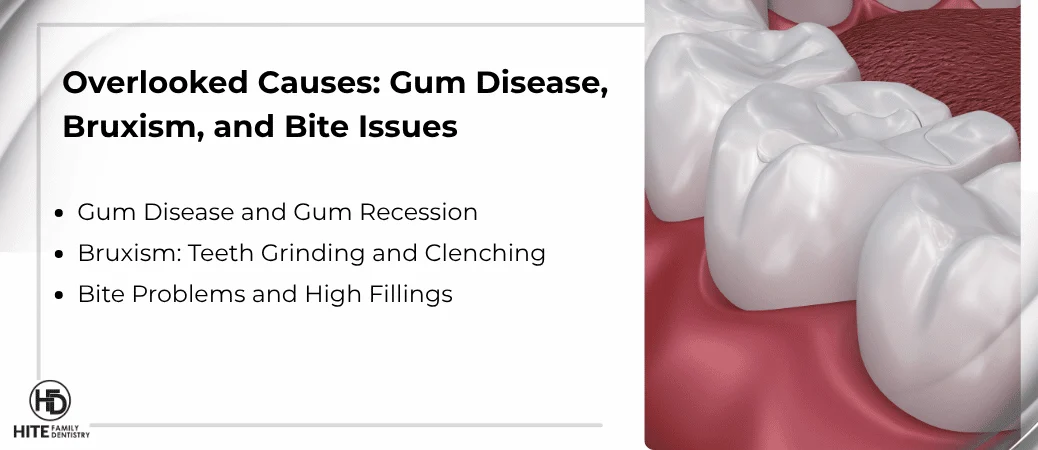
Gum Disease and Gum Recession
Early gum disease can create occasional soreness that flares up when food gets trapped below your gumline. The pain might fade once you brush or rinse, but the bacteria causing the problem stay active.
Gum recession often develops slowly alongside gum disease. When your gums pull back from your teeth, they expose sensitive root surfaces that weren’t meant to touch air or food.
This creates sharp pain when you drink something cold or bite down in certain spots.
Signs you might have gum problems:
- Bleeding when you brush or floss
- Swollen or tender gums that come and go
- Bad breath that won’t go away
- Teeth that look longer than before
Good oral hygiene helps prevent gum disease before it starts. Brush twice daily, floss every day, and see your dentist for regular cleanings.
If you already have symptoms, gum treatment can stop the damage and protect your teeth from future problems.
Bruxism: Teeth Grinding and Clenching
Bruxism is the habit of grinding or clenching your teeth, often while you sleep. Many people don’t realize they do it until a dentist spots the damage or a partner hears the grinding sounds at night.
The pressure from teeth grinding can cause pain that comes and goes. You might feel sore when you wake up but fine by afternoon.
The force during bruxism can exceed normal chewing forces by several times, which explains why it causes so much damage over time.
Bruxism can lead to:
- Worn down enamel
- Cracked or chipped teeth
- Jaw pain and headaches
- Gum recession from excessive pressure
A custom night guard protects your teeth while you sleep. Your dentist makes it from a mold of your mouth so it fits properly and stays comfortable.
Wearing a nightguard reduces the stress on your teeth and can stop the cycle of intermittent pain.
Bite Problems and High Fillings
Sometimes your teeth don’t line up correctly when you bite down. This creates uneven pressure that can cause sharp pains in specific spots. A filling that’s slightly too high can create the same problem.
These bite problems often hurt only when you chew in certain directions. The rest of the time, you feel fine.
Your dentist can perform bite testing using special paper that marks where your teeth touch first. If one spot hits before the others, it absorbs too much force.
A simple bite adjustment fixes most of these issues. Your dentist carefully reshapes the high spot so pressure spreads evenly across all your teeth.
This quick procedure often provides immediate relief from pain that’s been bothering you for weeks or months.
How Dentists Diagnose Intermittent Tooth Pain
Dentists use a combination of visual checks, special tools, and testing methods to find the source of your tooth pain.
The process includes examining your teeth, taking images, and performing specific tests to tell the difference between cavities, cracks, and infections.
What to Expect at a Dental Assessment
Your dental appointment starts with questions about your symptoms. The dentist will ask when the pain happens, how long it lasts, and what makes it better or worse.
During the dental examination, your dentist looks at all your teeth and gums. They check for visible signs of decay, cracks, or gum problems. You’ll need to point out which tooth hurts, even if the pain comes and goes.
The dentist also asks about pain when biting down on food. This helps narrow down possible causes. They may have you bite on something to see if it triggers discomfort.
Your dental check-up includes checking old fillings and crowns. These can crack or wear down over time and cause intermittent pain.
Diagnostic Tools: X-Rays, Exams, and Percussion Tests
X-rays show problems you can’t see with the naked eye. They reveal cavities between teeth, infections at the root, and bone loss around teeth. Digital x-rays give clear pictures of what’s happening inside your tooth.
A percussion test involves tapping on your teeth with a dental tool. If tapping causes sharp pain, it suggests inflammation or infection in the tooth’s nerve or root area.
Your dentist may use cold or heat tests during the dental exam. These check how your tooth nerve responds to temperature changes. A tooth that stays sensitive after the cold is removed might need root canal treatment.
Electric pulp testing sends a small current through your tooth to test nerve health. The test doesn’t hurt but helps determine if the nerve inside is alive or damaged.
Differentiating Between Decay, Cracks, and Infections
The diagnosis of tooth pain depends on matching your symptoms with test results. Cavities usually show up clearly on x-rays as dark spots in the tooth structure.
Cracks are harder to spot because they don’t always appear on x-rays. Your dentist uses special lights and dyes to find hairline fractures. A cracked tooth typically hurts when you bite down and release pressure.
Infections cause different symptoms than decay or cracks. Signs that might indicate infection or abscess formation include throbbing pain, swelling, and sensitivity to pressure.
Your dentist looks at all the information together. They consider your pain patterns, what they see during examination, and what diagnostic tests reveal to make an accurate diagnosis.
Treatment Options and Preventive Tips for a Pain-Free Smile
Your dentist can recommend several treatments based on what’s causing your tooth pain, from simple fillings to more involved procedures like root canal therapy.
Taking care of your oral health through daily habits can also prevent many dental problems before they start.
Fillings, Root Canal Therapy, and Gum Treatments
If you have a cavity, your dentist will remove the decay and place a filling to restore your tooth. The procedure is quick and prevents the decay from spreading deeper.
Root canal treatment becomes necessary when infection reaches the tooth’s pulp or nerve. Your dentist removes the infected tissue, cleans the inside of your tooth, and seals it to prevent future problems.
Many people worry about root canal therapy, but modern techniques make it much more comfortable than you might expect.
For gum-related pain, your dentist may recommend gum treatment to address inflammation or infection. This can include deep cleaning procedures to remove bacteria below the gumline.
Early gum disease responds well to professional cleaning and improved home care.
A dental abscess requires immediate attention since it involves a serious infection. Your dentist will drain the abscess and may prescribe antibiotics to clear the infection before performing additional treatments.
Managing Sensitivity and Reversible Pulpitis
Tooth sensitivity to hot or cold often responds to special toothpaste designed for sensitive teeth. These products contain ingredients that block the pathways to your tooth’s nerve.
Reversible pulpitis means your tooth’s nerve is irritated but not permanently damaged.
Your dentist might recommend fluoride treatments to strengthen worn enamel or suggest avoiding extreme temperatures while your tooth heals. Using fluoride toothpaste twice daily helps protect your enamel and reduce sensitivity.
If you grind your teeth at night, a custom mouthguard can prevent further damage and reduce pain. Your dentist can fit you with one that’s comfortable to wear while you sleep.
Avoiding very hot, cold, or sugary foods gives your teeth time to recover from irritation. You might also benefit from desensitizing treatments applied in your dentist’s office.
Prevention: Oral Hygiene and Dental Habits
Good oral hygiene is your best defense against preventing tooth pain and dental problems. Brush twice daily for two minutes using fluoride toothpaste and a soft-bristled brush.
Flossing daily removes food and bacteria from between your teeth where your toothbrush can’t reach. This simple habit helps prevent gum disease and cavities between teeth.
Daily habits that protect your oral health:
- Drink water throughout the day to rinse away food particles
- Limit sugary snacks and acidic drinks
- Chew sugar-free gum after meals to increase saliva production
- Replace your toothbrush every three months
Visit your dentist every six months for professional cleanings and checkups. These appointments catch small problems before they become painful or expensive to treat.
Your dentist can also identify worn enamel early and recommend treatments to prevent further damage.
Frequently Asked Questions
Tooth pain that starts and stops can leave you with many questions about what’s happening and whether you need treatment right away. The answers depend on your specific symptoms and what’s causing the irritation.
Why does my tooth pain come and go instead of staying constant?
Your tooth pain comes and goes because the nerve inside your tooth responds to different triggers throughout the day.
Temperature changes, pressure, inflammation, eating habits, and nerve irritation can all affect how much discomfort you feel at any given time.
The nerve tissue reacts differently depending on how irritated it is. Early inflammation might give you brief sharp pain or sensitivity that disappears between flare-ups.
Pressure from chewing, grinding, or clenching can trigger discomfort at certain times but not others.
Inflammation inside the tooth or gums can also increase and decrease over time, which explains why some people notice pain that only lasts a few seconds or only bothers them on certain days.
The fluctuating nature of the pain often reflects the tooth’s nerve responding to specific triggers like hot drinks, cold air, or biting pressure. Even though the pain isn’t constant, the underlying problem may still be progressing.
How can I tell if my intermittent toothache is from a cavity or something else?
Cavities often cause pain when you eat sweets, drink cold beverages, chew on one side, or get food trapped in the damaged area. The pain usually improves after you brush or rinse but comes back during your next meal.
Other problems create different patterns. Cracked teeth hurt when you bite down or release pressure. Gum irritation causes tenderness around the tooth rather than inside it.
Sinus pressure can make your upper back teeth ache, but the discomfort usually affects multiple teeth at once and gets better when your congestion clears.
Sensitivity from worn enamel or exposed roots reacts briefly to temperature but doesn’t cause lasting pain.
Even a tiny cavity can trigger pain when food or liquid hits the sensitive layer beneath the enamel. Once the irritant is gone, the pain subsides, but the cavity is still there.
What are the common signs that a tooth might be cracked even if it looks normal?
A cracked tooth often hurts only when you apply pressure, making it hard to notice at first. You might feel sharp pain while chewing, when releasing a bite, or when eating hard foods on one side of your mouth.
Cracked teeth can result in sudden, sharp pain due to pressure changes within the tooth structure. The discomfort typically happens during the bite and might feel worse when you let go.
Many cracks are too small to see without special tools or imaging. The pain pattern is often your first clue that something is wrong.
You might also notice increased sensitivity to temperature if the crack extends deeper into the tooth.
When does tooth sensitivity or pain mean I might need a root canal?
You might need a root canal when your tooth pain becomes more intense, lasts longer after triggers, or starts happening without any reason.
Pain that wakes you up at night often indicates deeper inflammation inside the tooth.
Sensitivity to heat is a bigger concern than cold sensitivity. If hot drinks cause pain that lingers after you finish drinking, the nerve tissue inside your tooth may be seriously inflamed or infected.
Other warning signs include throbbing pain, swelling near the tooth, a pimple-like bump on your gums, or a bad taste in your mouth.
When bacteria reach the pulp inside the tooth, inflammation may cause brief throbbing, random pain episodes, sensitivity to heat, and pressure discomfort.
Sometimes tooth pain actually decreases suddenly even though the infection is getting worse. This happens when the nerve tissue starts dying, which temporarily reduces pain while the problem continues spreading.
Why does it hurt more when I bite down or chew on one side?
Pain when biting down usually means something is creating pressure on an irritated area. This could be a cracked tooth, a cavity near the root, an infection at the tip of the root, or a failed filling that’s allowing bacteria underneath.
Cracks create sharp pain because biting forces the crack to open slightly and irritate the nerve. When you release the bite, the crack closes again, which can also cause a brief jolt of pain.
Deep cavities and infections make the tooth tender to pressure because inflammation builds up inside the rigid tooth structure with nowhere to expand. Grinding your teeth at night can also make them sore and sensitive to chewing the next day.
Old fillings sometimes develop gaps or leaks over time, letting bacteria create new decay underneath. This can lead to sharp pain when biting, temperature sensitivity, and intermittent discomfort.
When should I see a dentist right away for on-and-off tooth pain?
You should see a dentist right away if you have swelling in your face or gums, a fever, severe pain that disrupts your sleep, or visible pus near the tooth. These signs suggest an infection that needs immediate treatment.
You also need prompt care if your pain is getting worse over time, lasting longer after triggers, or happening more frequently. Delaying evaluation can increase the risk of severe infection, tooth fractures, nerve damage, and tooth loss.
Even mild pain that comes and goes deserves attention within a few days or weeks. The underlying issue, like a dying tooth, infection, or cavity, likely still exists even if your tooth pain goes away.
Ignoring it could allow the problem to worsen and require more invasive treatment later.
Don’t wait for pain to become constant before seeking care. Early diagnosis usually allows more conservative treatment and better long-term outcomes.