
An older dental bridge can serve you well for many years. But a failed dental bridge can cause discomfort, looseness, or difficulty chewing.
The problem may involve the natural teeth holding it in place, the dental cement, or the bridge itself.
When an older dental bridge fails, problems with the anchor teeth are often a contributing factor.
Decay under the crowns, gum and bone loss around the roots, or a crack in a supporting tooth can undermine the bridge. Your replacement options depend on how much healthy tooth and bone remain.
This news can feel unsettling, especially if you worry about losing another tooth. The good part is that you have choices, from a new tooth-supported bridge to implants or a partial denture.
Each one fits a different set of clinical findings, and your exam decides which fits you.
Key Takeaways
- Hidden decay, gum disease, cracks in supporting teeth, and deterioration of dental cement can all contribute to bridge failure.
- X-rays help, but some damage only shows once the old bridge comes off.
- The best replacement matches the health of your remaining teeth and bone.
Why Do Anchor Teeth Fail Beneath an Older Bridge?
Anchor teeth can develop decay, lose gum and bone support, or crack under heavy chewing forces, even if they have previously undergone root canal treatment.
A bridge depends on two or more of these teeth, so one weak anchor can loosen the entire span.

Tooth Decay Can Develop Beneath the Supporting Crowns
The crowns on your abutment teeth (the dentist’s word for anchor teeth) cannot get cavities. The tooth under each crown can.
Decay tends to start at the margin, the thin line where the crown edge meets the tooth near the gum.
Over the years, dental cement can wash out and tiny gaps can open at that edge. Bacteria slip in, and the decay spreads under the crown where you cannot see it. Many people feel nothing until the decay is deep.
That is why a bridge can seem fine one month and painful the next. The damage often built slowly, out of sight, for a long time.
Gum Disease Can Weaken the Bone Around Abutment Teeth
Gum disease, also called periodontal disease, can damage the gums and bone that hold each root in place. Appropriate periodontal therapy can help manage gum disease and protect the remaining supporting teeth.
Gum recession adds another problem. As the gums pull back, more of the root shows. Roots are softer than enamel and decay faster, and the crown edge may sit exposed.
It helps to know two kinds of bone loss. Bone loss around the supporting teeth comes from gum disease and weakens the anchors.
Ridge shrinkage under the missing tooth happens because that area no longer gets chewing pressure. The first threatens your anchors; the second mostly affects implant planning later.
Fractures, Grinding, and Bite Forces Can Overload the Supports
Anchor teeth carry their own chewing load plus the load of the missing tooth. Teeth with large old fillings or past root canals can be more brittle. Over time, a crack can form in the root or under the crown.
Bruxism, or teeth grinding, raises that strain. Many people grind at night without knowing it. Grinding places excessive force on bridges and is a common cause of fractures and cement failure.
Bite changes matter as well. If other teeth shift or wear, your bridge may start taking more pressure than it was built for. Porcelain can chip and cement can break down.
A Loose Bridge Does Not Always Mean the Anchor Teeth Are Lost
A loose bridge is a warning, but it is not a verdict. Sometimes the cement has simply failed while the anchor teeth stay healthy. In that case, the dentist may be able to clean and recement the same bridge.
The risk is time. Once a bridge loosens, a gap opens under the crowns and bacteria collect there quickly. Getting seen soon gives you the best chance of keeping your teeth and your options open.
How Does the Dentist Decide Whether the Anchor Teeth Can Be Saved?
The dentist decides by checking how much healthy tooth, root, and bone each anchor has left. That process starts with your symptoms, moves to an exam and X-rays, and often finishes once the old bridge is off and the teeth can be seen directly.
Which Symptoms Need Prompt or Emergency Attention?
Some signs mean you should call your dentist the same day or seek emergency care:
- Swelling in your gum, face, or jaw
- A pimple-like bump on the gum that leaks pus
- Fever or feeling unwell along with tooth pain
- Pain that keeps getting worse or wakes you at night
- A bridge so loose you might swallow or inhale it
If you experience difficulty breathing or swallowing, seek emergency medical care immediately. These symptoms may indicate a spreading dental infection or an airway obstruction that requires urgent attention.
While you wait, chew on the other side and keep the area clean with gentle brushing. If the bridge comes off, save it in a clean container and bring it along.
What the Examination and Dental X-Rays Can Reveal
At a dental check-up, your dentist looks at the gums, measures pocket depths around each anchor, and tests for movement. They check your bite and the fit of the pontic (the false tooth in the middle).
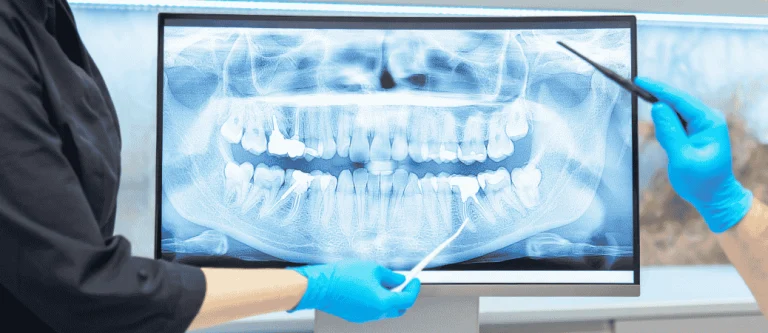
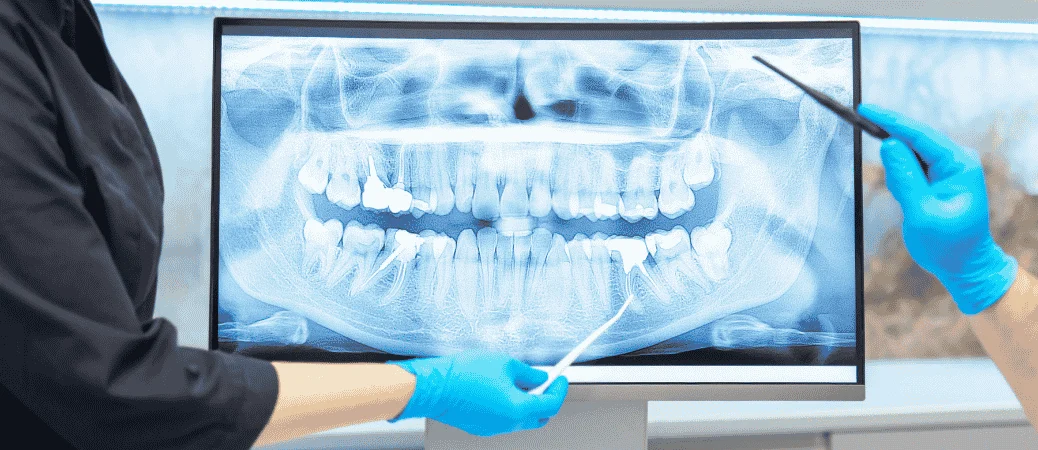
Dental X-rays show things the eye cannot. They can reveal decay at crown edges, infection at root tips, and the level of bone around each tooth. They also show the ridge under the missing tooth, which matters for future implants.
Still, metal and porcelain can block part of the view. X-rays give a strong preview, not a complete picture.
How the Old Bridge Is Removed and the Teeth Reassessed
Removal is done with local numbing. The dentist may gently loosen the bridge, or cut it into sections so it comes off without harming the teeth underneath. You may get a temporary bridge so you are not left with a gap.
With the crowns off, the dentist can see every surface of each anchor tooth. This is where surprises happen. Decay is sometimes deeper than the X-rays suggested, or a crack shows up that was hidden under metal.
When a Filling, Root Canal Treatment, or Extraction Is Needed
What happens next depends on what the dentist finds:
| Finding on the anchor tooth | Likely next step |
| Small decay, healthy nerve | Remove decay and rebuild with a filling or core |
| Decay or infection reaching the nerve, strong root | Root canal treatment, then a core and new crown |
| Crack running into the root | Extraction is usually needed |
| Too little tooth left above the gum | Extraction, or sometimes extra steps to expose more tooth |
| Severe bone loss and movement | Extraction is likely |
When an anchor tooth has an infected pulp but retains enough healthy structure, root canal treatment may help preserve it. When a tooth cannot be saved, the goal shifts to choosing a suitable replacement for the new gap.
What Can Replace a Failed Dental Bridge?
Your replacement options include a recemented or new bridge, single implants, an implant-supported bridge, or a removable partial denture.
The right one depends on how many teeth are missing, how healthy your remaining anchors are, and how much bone you have.
When Recementing the Existing Bridge or Making a New Bridge Is Reasonable
Recementing may be appropriate when the bridge is intact, still fits well, and the supporting teeth are healthy. Your dentist can determine whether this approach is suitable and provide an estimate before treatment begins.
A new tooth-supported bridge makes sense when the anchors need some repair but have strong roots and good bone. Your dentist may rebuild the teeth, then make fresh dental crowns and bridges that seal better at the edges.
There is a trade-off. Each new set of crowns removes a little more tooth. If your anchors are already thin or heavily filled, another round of shaping may leave them weak.
When Individual Dental Implants Can Avoid Using Natural Teeth as Anchors
An implant is a small post placed in the jawbone that holds its own crown. It stands alone, so it does not rely on neighboring teeth.
This option fits well when the teeth beside the gap are healthy and you would like to leave them untouched, or when one anchor is lost and the other is fine.
Single tooth dental implants need enough healthy bone and good gum health. Smoking, uncontrolled diabetes, and active gum disease can raise the risk of problems.
Implants are strong, but they are not failure-proof. They need the same daily cleaning and checkups as natural teeth.
When an Implant-Supported Bridge Can Replace Several Missing Teeth
If you now have a longer gap, say three or four missing teeth, you may not need an implant for each one. Two implants can hold a bridge that spans space.
This choice suits people who have lost both anchors or who have a wide gap with weak neighboring teeth. It needs good bone at the implant sites. Cleaning under the bridge stays just as important as before.
When a Removable Partial Denture Is a Practical Alternative

A removable partial denture uses a base and clasps that hold onto your remaining teeth. You take it out to clean it and at night.
It can be a good fit when surgery is not right for you, when bone is limited and grafting is not an option, or when cost is a major concern.
It can also serve as a temporary step during healing. You can learn more about dentures and partials and how they fit with other teeth.
Partials take some getting used to. Clasps can put extra pressure on the teeth they grip, so those teeth need careful care.
How Bone Grafting, Healing Time, and Cost Affect the Choice
Ridge shrinkage under a long-missing tooth can leave insufficient bone for an implant. In suitable cases, bone grafting can help rebuild jawbone volume and create a more stable foundation for future implant placement.
Knowing the signs you may need a bone graft before an implant can help you plan.
Timelines vary. A recemented bridge may take one visit. A new bridge often takes a few weeks. Implants with grafting can take several months while the bone heals.
Cost usually rises with each added step:
- Root canals or core buildups on anchor teeth
- Extractions
- Bone grafting
- The number of implants or crowns
- Temporary teeth during healing
At Hite Family Dentistry, our team can review your dental insurance benefits and provide a pre-treatment estimate outlining each stage of your care. Final coverage depends on your insurance provider.
How Can You Protect the Remaining Teeth and Your Next Restoration?
You protect your next restoration by cleaning under it every day, keeping regular checkups, managing grinding, and reporting small changes early. These habits target the exact problems that wear down anchor teeth.
Clean Beneath the Pontic and Around the Supporting Teeth Every Day
The space under the pontic and the crown edges on your anchors are the hardest spots to reach. A toothbrush alone misses them. Plaque left there feeds decay at the margins and irritates the gums.
Brush twice a day with fluoride toothpaste, angling the bristles toward the gumline. Then clean under the bridge once a day, ideally at night. Limit sugary snacks between meals so your teeth get breaks from acid.
Choose Floss Threaders, Interdental Brushes, or a Water Flosser
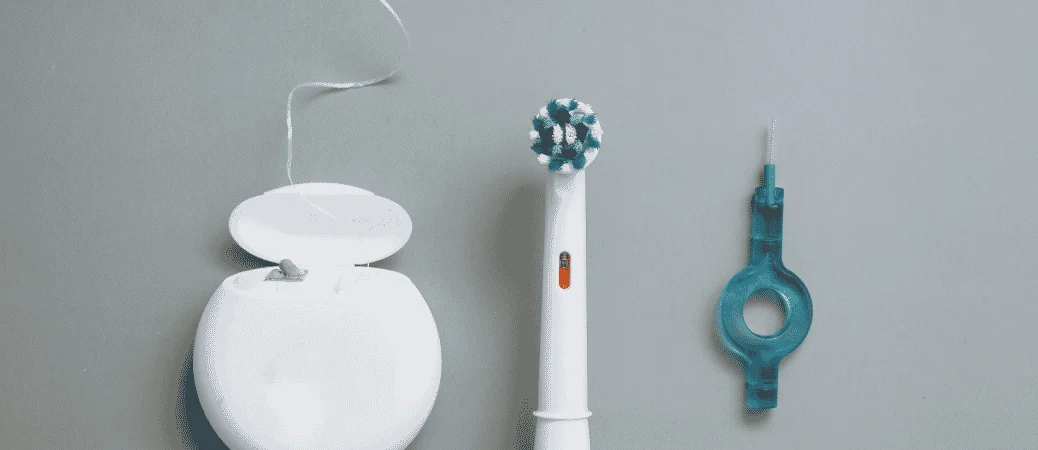
Different tools suit different hands and spaces:
- Floss threader: A stiff loop that pulls floss under the pontic. Slide the floss side to side and up along each anchor.
- Interdental brush: A tiny brush that fits between teeth and under bridges. Pick a size that slips in snugly without forcing.
- Water flosser: A stream of water that flushes debris. It works well for people with limited hand movement, and you can pair it with floss.
Ask your hygienist to show you the angle and size that fit your mouth.
Keep Personalised Dental Check-Ups and Address Grinding
Regular dental cleanings and exams help your dentist monitor the health of your supporting teeth, gums, and dental bridge.
If you have had gum disease or several crowns, your dentist may recommend more frequent visits. X-rays at set intervals help catch edge decay early.
If you grind or clench, a custom night guard spreads out the force and protects both natural teeth and restorations. Signs include worn edges, sore jaw muscles in the morning, or headaches near the temples.
Report New Looseness, Food Trapping, or Persistent Bad Taste Early
Small changes are easier to fix. Call if you notice:
- A slight rocking when you bite
- Food packing in a new spot
- A bad taste or smell that brushing does not clear
- Sensitivity near a crown edge
- Gums that bleed or look puffy around an anchor
Choose the Replacement That Your Teeth and Bone Can Support
The best replacement is the one your remaining teeth and bone can hold up over time. Strong abutment teeth with good bone may support a new bridge. Weak or lost anchors point toward implants or a partial denture.
Keep the two types of bone loss in mind. Gum-related bone loss around your teeth affects whether they can stay as anchors. Ridge shrinkage under the gap affects whether implants need grafting first.
Expect your plan to shift once the old bridge comes off, since that is when hidden damage shows up. If several teeth are struggling at once, ask how dentists rebuild a smile when multiple teeth are failing so each step fits a larger plan.
Bring a list of your symptoms, your medical history, and your budget to the visit. Ask your dentist to explain what they found on each anchor tooth and why one dental restoration fits better than another.
Frequently Asked Questions
What is the most common cause of dental bridge failure?
Decay in the anchor teeth is one of the most common causes. It starts at the crown edges and spreads underneath, often without pain at first. Gum disease and cracked anchors are close behind.
How many times can a dental bridge be replaced?
There is no set number. Each replacement removes a bit more tooth structure, so the limit depends on how much healthy tooth and bone remain. When the anchors grow too weak, implants or a partial may become better choices.
What is the average lifespan of a dental bridge?
Many bridges last about 5 to 15 years, and some well-kept bridges last 20 years or longer. Your cleaning habits, grinding, and gum health all affect how long yours lasts. Read more about the lifespan of dental restorations and what shortens it.
Are dental implants better than another bridge after an anchor tooth fails?
Implants are a strong option when bone is adequate and you want to avoid reshaping healthy teeth.
A new bridge may still suit you if your anchors are sound and you prefer a faster, non-surgical path. Your exam findings should guide the choice.
Can a bridge still be used if one anchor tooth needs to be extracted?
Usually the old bridge cannot stay as it is, because it loses support on one side. Your dentist may recommend a new tooth-supported bridge, an implant-supported restoration, or a partial denture. The best option depends on the health of your remaining teeth and the available jawbone support.