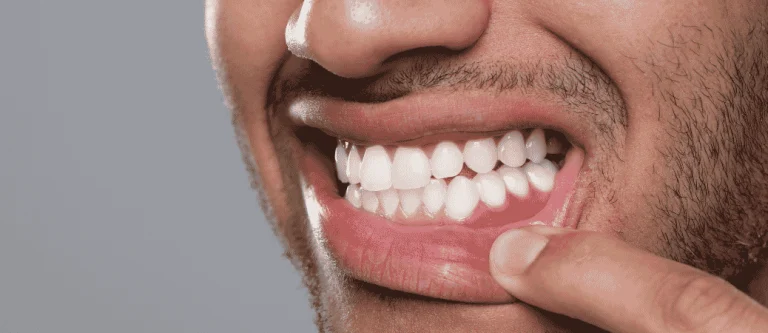

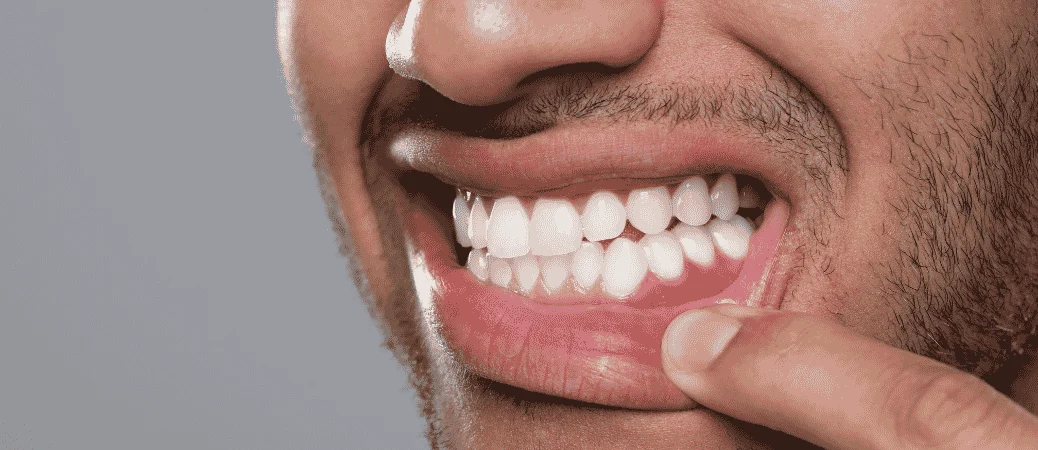
You may need a bone graft before dental implants if your jawbone is too thin or too soft to hold an implant in place.
If you are looking for the signs you need bone graft before dental implant placement, this usually starts with checking whether your jaw has enough strength to support the post.
About half of implant patients need a bone graft before implants, usually because bone shrinks after missing teeth, gum disease, or a tooth extraction.
Your jaw needs a tooth root to stay strong. Once that root is gone, the bone in that spot slowly gets smaller.
The good news is that grafting is a routine procedure that makes dental implants possible for more people than in the past.
Below, you’ll learn the warning signs of bone loss, how your dental team checks your jaw, what the graft itself involves, and how long you’ll wait before implant placement.
Key Takeaways
- Bone loss after tooth loss, gum disease, or extraction is the main reason a graft is recommended.
- X-rays and 3D scans show your dentist whether your jaw can support an implant on its own.
- Most grafts need at least three months to heal before your implant goes in.
When a Bone Graft May Be Needed
Your jawbone does a lot of quiet work when you get a dental implant. It holds the implant in place, absorbs chewing forces, and gives the titanium post something to bond with.
When there is not enough bone, a bone graft before implants can rebuild what is missing.
How Bone Supports Implant Stability
Think of your jawbone as the concrete that holds a fence post upright. The implant sits inside the bone, and the bone grips it from every side.
That grip is what creates implant stability. Without enough surrounding bone, the implant can shift slightly, and even tiny movement can cause it to fail.
Bone loss usually starts soon after a tooth comes out. Gum disease, injury, and years of wearing dentures can also shrink the ridge.
This is one of the more common signs you need bone grafting before implant placement. In fact, a graft is recommended for close to half of all implant patients, so it’s a normal part of the process rather than a setback.
Bone Height, Width, Density, and Volume
Your dentist doesn’t just check if you have bone. They measure it, usually with a 3D cone beam scan.
Four things matter most:
| What’s measured | Why it matters |
| Bone height | Room for the implant without hitting a nerve or your sinus |
| Bone width | Enough bone on the front and back of the implant |
| Bone density | How solid the bone is, which affects early stability |
| Bone volume | The total amount of bone in that spot |
A thin jawbone is the most common problem, since the ridge narrows before it gets shorter.
A graft can add density and volume back to your jawbone, restoring the jawbone strength needed to hold an implant.
Why Osseointegration Needs a Strong Foundation
Osseointegration is the process where your bone grows directly onto the implant surface. It usually takes three to six months, and it’s what turns a metal post into a working tooth root.
Healthy bone cells have to be in direct contact with the implant for this to happen. Thin or soft bone gives fewer cells to work with, which lowers dental implant success rates.
Chewing forces make this even more important. Back teeth can press down with well over 100 pounds of force, and that pressure has to spread into solid bone.
Grafting first creates a stronger foundation and improves your odds of long-term implant success.
Signs of Jawbone Loss to Watch For
Jawbone loss usually happens quietly, so the clues show up in how your bite feels, how your dentures fit, and how your face looks.
Missing teeth, shifting dentures, a flattened gum ridge, and a history of gum disease or injury are the most common signals that you may need bone grafting before implants.

A Missing Tooth or Long-Term Tooth Loss
Your jawbone stays strong partly because chewing puts pressure on it. When you lose a tooth, that pressure stops, and your body starts to break down the bone in that spot. This is called bone resorption.
The change happens faster than most people expect. After a tooth extraction, the jawbone in that area can lose roughly 30% to 60% of its width during the first year, and it keeps shrinking slowly after that.
So if you lost a tooth five or ten years ago and never replaced it, there is a good chance the ridge has thinned.
Waiting a long time after losing a tooth is one of the clearest reasons a graft becomes necessary before an implant can be placed.
Loose Dentures and Difficulty Chewing
Dentures rest on your gums and the bone underneath. They do not stimulate the bone the way tooth roots do, so long-term denture use often speeds up bone loss.
You might notice these changes:
- Dentures that slip when you talk or laugh
- Sore spots that keep coming back
- Needing more adhesive than you used to
- Frequent relines or adjustments
Difficulty chewing is another sign worth mentioning to your dentist. If you avoid tougher foods like steak, raw carrots, or crusty bread, your bite may no longer have a stable base.
Loose dentures and long-term denture wear are both linked to jawbone loss, and they often mean a graft is needed before implants.
A Flattened Ridge or Sunken Facial Appearance
Run your tongue along the area where a tooth used to be. A healthy ridge feels rounded and full. A resorbed ridge feels flat, narrow, or even dented.
Your dentist may notice the same thing during an exam. Receding gums and a thinning jaw ridge are among the most frequent visual signs that structural support has been lost.
With more advanced bone loss, the changes can show on your face. Your cheeks may look hollow, your lips may lose support, and the lower third of your face can appear shorter.
If the ridge is too narrow or short to hold an implant, your dentist may recommend ridge augmentation to rebuild width and height first.
Past Gum Disease, Infection, or Jaw Injury
Periodontal disease is one of the leading causes of jawbone loss. In periodontitis, bacteria below the gumline destroy the bone that holds your tooth roots in place.
That damage does not repair itself once the infection is treated. So even if your gums are healthy now, past gum disease can leave you with too little bone for an implant.
Old infections, like an abscess at a tooth root, can also eat away at surrounding bone.
Trauma matters too. A sports injury, car accident, or fall that damages your jaw can reduce bone volume.
Naturally thin bone and an enlarged sinus above your upper molars can create the same problem, which is why a CBCT scan or 3D imaging is used to measure exactly how much bone you have.
How Your Implant Team Determines What You Need
You won’t have to guess whether you need a bone graft; your implant team figures that out with a hands-on exam and detailed scans of your jaw.
The process looks at how much bone you have, how strong it is, and where the nearby sinuses sit.
The Implant Consultation and Oral Examination
Your implant evaluation usually starts with a conversation. Your implant dentist or oral surgeon will ask when you lost your tooth, whether you’ve had gum disease, and if you’ve worn a denture for years.
Next comes the hands-on part. They check your gums for swelling or recession, test nearby teeth for looseness, and feel the ridge of bone under your gums to see if it feels thin or sunken.
They’ll also review your medical history, since conditions like diabetes and habits like smoking can affect healing.
This visit is where your goals get matched to your anatomy. If the exam suggests bone loss, imaging comes next to confirm it.
What Dental X-Rays and 3D Imaging Show
Standard dental X-rays are a good starting point. They show bone levels around your teeth in two dimensions, but they can’t show thickness.
That’s why most implant planning includes advanced imaging. A CBCT scan (also called a 3D cone beam scan) is a short, low-dose CT scan that builds a three-dimensional model of your jaw.
With 3D imaging, your surgeon can measure:
| What’s Measured | Why It Matters |
| Bone height | Decides how long an implant can safely be |
| Bone width | Bone must surround the implant on all sides |
| Bone density | Softer bone may need extra support or longer healing |
| Nerve and sinus location | Keeps the implant a safe distance away |
These numbers are what tell your team whether a graft is part of your dental implant preparation or not.
Assessing the Upper Jaw and Sinus Area
The upper jaw, or maxilla, needs special attention. The maxillary sinuses are hollow air spaces that sit right above your back upper teeth.
When an upper molar is lost, the bone below the sinus often shrinks, and the sinus cavity can expand downward into that space. That leaves less bone height for an implant.
Your 3D scan shows exactly how far the sinus floor has dropped. If there isn’t enough bone, a sinus lift may be suggested; this raises the sinus membrane and adds graft material underneath.
Your team will explain whether a lift, a ridge graft, or no graft at all fits your case, along with how much healing time to plan for.
Bone Graft Options and Treatment Approaches
Not every dental bone graft looks the same. The type your dentist picks depends on where the bone is missing, how much is gone, and whether you still have the tooth.
Below are the three most common grafting procedures, plus a look at the materials used to rebuild the bone.
Socket Preservation After Tooth Extraction
Socket preservation happens right after a tooth comes out. Your dentist fills the empty socket with graft material and covers it with a protective membrane so the gum tissue doesn’t collapse into the space.
Why the rush? The jaw starts shrinking as soon as the tooth root is gone, and most of that loss happens in the first six months.
This is the simplest bone graft option before implants because it prevents a problem instead of fixing one. It also adds very little extra chair time, since you’re already numb and the site is already open.
Healing usually takes three to six months before the implant goes in.
Ridge Augmentation for Lost Bone
If a tooth has been missing for years, the ridge, which is the arch of bone that used to hold your teeth, may be too thin or too short for an implant.
Ridge augmentation rebuilds that area. Your surgeon opens the gum, adds graft material where the bone is missing, and covers it with a membrane to keep the graft in place while new bone forms.
Two common approaches:
- Particulate grafting with a membrane for small to moderate defects
- Block grafting, where a solid piece of bone is screwed into place for larger gaps
Wider defects take longer to heal. Plan on four to nine months before implant placement.
Sinus Lift for Upper Back Implants
Your upper jaw, or maxilla, sits right under the maxillary sinus. When you lose an upper molar, the sinus floor often drops down into the space, leaving too little bone for an implant.
A sinus lift fixes that. The surgeon gently raises the sinus membrane and packs graft material underneath it to build height.
There are two ways to do it:
| Method | Best for | How it’s done |
| Lateral window | 4 mm or less of bone | Access through the side of the jaw |
| Crestal (osteotome) | 5 mm or more of bone | Access through the implant site itself |
With enough starting bone, the implant sometimes goes in the same day.
Choosing a Bone Graft Material
Your surgeon will match the material to the size of the defect and how fast you need it to heal.
| Type | Where it comes from | Notes |
| Autograft | Your own body, often the chin or back of the jaw | Heals fastest but needs a second surgical site |
| Allograft | A human tissue bank | Widely used, no second surgery |
| Xenograft | Usually cow or pig bone | Holds its shape well, resorbs slowly |
| Alloplast | Synthetic, such as calcium phosphate | No donor tissue involved |
Many surgeons blend two materials to get both quick healing and lasting volume.
One timing note worth remembering: once a graft heals, it’s best to place the implant within six to 12 months. After that, the new bone starts to shrink and you may need more work.
Treatment Timeline, Healing, and Implant Placement
Bone grafting before implants adds a few months to your treatment, but it builds the bone volume your implant needs to stay put.
Most people move from graft surgery to a finished implant crown in about 9 to 15 months, depending on how much bone needs rebuilding.
What Happens During Bone Grafting
Your dentist or surgeon numbs the area, opens the gum tissue, and places graft material where bone is missing. If dental anxiety makes treatment feel stressful, sedation dentistry may help you feel more comfortable during care.
The graft can come from your own body, a donor, an animal source, or a synthetic material. A small membrane often covers the graft to keep the gum tissue from growing into the space.
Then the site is stitched closed. The whole visit usually takes 30 minutes to a few hours, based on how complex your case is.
If a tooth is being removed, your dentist may fill the empty socket with graft material during the same appointment.
This is called socket preservation, and it helps prevent the bone loss that normally follows an extraction.
Bone Graft Healing and Recovery

The first week is the most noticeable part of bone graft recovery. Expect swelling, tenderness, and some bruising that fades over one to two weeks.
You may also notice tiny bone particles that look like grains of sand coming out of the site. This is normal in the first few days, though you should call your dentist if a lot comes out.
Under the gums, your body slowly replaces the graft material with your own bone. That part takes much longer than the surface healing.
| Type of graft | Typical healing time |
| Socket preservation | 3–4 months |
| Small or guided bone graft | 4–6 months |
| Sinus lift or large ridge graft | 6–9 months or more |
Watch for warning signs like growing pain, pus, or fever, which can point to infection or graft failure.
When Dental Implant Surgery Can Begin
Your dentist checks progress with an exam and a 3D scan or X-ray. Implant placement only moves forward once there is enough dense bone to hold the implant firmly.
Small grafts sometimes allow the implant to go in during the same surgery. Larger grafts almost always need several months of separate healing first.
After the implant is placed, bone fuses to it over about three to six months. This step, called osseointegration, is what gives you real implant stability.
Try not to wait too long after the graft heals. Getting your implant within six to 12 months helps, because unused bone starts to shrink again.
Habits That Support Healing and Implant Success
Small daily choices have a real effect on whether your graft and implant hold up.
- Skip smoking and vaping. Nicotine cuts blood flow to the site and raises the risk of graft failure and implant failure.
- Keep up gentle oral hygiene. Brush your other teeth normally and rinse as directed instead of swishing hard.
- Eat soft foods for the first several days, and chew on the other side.
- Take medications as prescribed, including antibiotics if you were given them.
- Avoid alcohol and heavy lifting early in recovery.
- Manage health conditions like diabetes and osteoporosis with your doctor, since both can slow bone healing.
Keep your follow-up visits, too. Regular checkups and cleanings protect long-term implant success once your crown is in place.
Why Following a Grafting Recommendation Matters
When your dentist says you need a bone graft first, that advice comes from what the 3D scan shows about the width and height of your jawbone.
Skipping that step can affect how stable your implant is, how long it lasts, and which tooth replacement options stay open to you.
Risks of Placing an Implant in Insufficient Bone
An implant works because bone grows tightly around the post and holds it in place. Without enough bone, that connection never gets strong enough.
Here’s what can go wrong:
- Early implant failure. The post stays loose instead of fusing with the bone.
- Poor implant stability under pressure. Chewing force can loosen an implant that has thin bone support.
- Gum recession or exposed metal. Not enough bone width means the implant may show through the gum tissue.
- Damage to nearby structures. In the upper jaw, the sinus cavity sits close by. In the lower jaw, there’s a major nerve.
A bone graft before dental implants rebuilds that foundation first. It adds time, but it protects the work you’re paying for.
Options for Extensive Jawbone Loss
Severe bone loss doesn’t automatically rule you out. It just changes the plan.
Your oral surgeon may suggest one of these approaches:
| Option | What It Involves |
| Sinus lift | Adds bone under the sinus floor in the upper back jaw |
| Ridge augmentation | Widens a jaw ridge that has narrowed after tooth loss |
| Block graft | Uses a solid piece of bone, often from your own jaw, for larger defects |
| Full arch implants | Places implants at angles to use the bone you still have |
Full arch approaches like All-on-X implants are designed to work with existing bone, which can reduce or remove the need for grafting in some cases. Whether that fits you depends on your scan and your goals.
Questions to Ask Before Choosing Your Treatment Plan

Bring a list to your consultation. A good implant dentist will welcome it.
Worth asking:
- How much bone am I missing, and where? Ask to see the images.
- What type of graft material do you recommend, and why?
- Can the graft and implant happen in one visit, or do I need two?
- How long is my total timeline? Grafting can add 4 to 9 months depending on the type.
- What happens to my jawbone health if I wait a year?
- What’s the full cost, including the graft, imaging, and the crown?
Ask about alternatives too. If a graft isn’t something you want, find out what other tooth replacement options or full mouth reconstruction may fit your situation.
Frequently Asked Questions
Getting a bone graft before an implant brings up a lot of questions, from how dentists check your bone to how long you’ll wait before the implant goes in.
How do I know if I need a bone graft before getting a dental implant?
You won’t know for sure until your dentist or oral surgeon takes a look. The main tool is a 3D scan, often a cone beam CT, which shows how much bone height and width you have in the exact spot where the implant would go.
Your dentist will also check your gums, review your dental history, and ask how long the tooth has been missing.
A dental evaluation with advanced imaging is the only reliable way to tell if your jaw can support an implant on its own.
What signs show that there may not be enough jawbone for an implant?
A few changes tend to show up as bone shrinks after tooth loss. These often appear months or years after a tooth is gone, so they can be easy to miss at first.
Watch for these:
- A sunken or hollow look in your cheeks or lips
- Gums that pull back from nearby teeth
- A denture or bridge that keeps loosening or rubbing sore spots
- Teeth that shift or feel loose near the gap
- A ridge that looks thin or flat where the tooth used to be
Visible thinning of the ridge often follows an injury, gum disease, or years of living with a missing tooth.
Can I still get dental implants if I have bone loss in my jaw?
In most cases, yes. Needing a graft doesn’t mean implants are off the table; it usually just adds a step before the implant goes in.
Your options depend on how much bone is missing and where. Small gaps might be filled at the same visit as your extraction, while larger areas may need a separate procedure such as a sinus lift or ridge augmentation.
Grafting is meant to improve implant stability so the post has solid support to fuse with.
How long does a dental bone graft take to heal before implant placement?
Plan on about 3 to 6 months in most cases. Some larger grafts take closer to 9 months.
Your healing time depends on the size of the graft, where it sits in your jaw, and how your body responds.
A small socket graft placed right after an extraction usually heals faster than a graft that rebuilds a wide section of the ridge.
Smoking, uncontrolled diabetes, and certain medications can slow things down, so tell your dentist about your full health history.
What are the signs that a dental bone graft is healing successfully?
Good healing is fairly quiet. Swelling and soreness peak in the first two or three days, then fade. The area should feel less tender each week, and the gum tissue over the graft should look pink and closed rather than open or angry red.
Some small, gritty particles may come out in the first few days, and that’s usually normal.
Call your dentist if you notice throbbing pain that gets worse after day three, a bad taste or odor, pus, a fever, or swelling that keeps growing.
Follow-up visits and X-rays are how your dentist confirms the graft is turning into solid bone before placing the implant.
How much does a dental bone graft typically cost before implants?
Prices range from a few hundred dollars for a simple socket graft to a few thousand for a larger procedure like a sinus lift.
What you pay depends on the type of graft material, how much is needed, and whether the work is bundled into a bigger implant plan.
Dental insurance sometimes covers part of the cost, especially when the graft follows an extraction.
Since roughly half of implant patients end up needing some grafting, it’s worth asking for a written estimate at your consultation so there are no surprises.