

Your smile affects how you feel and how others see you, but picking the right treatment can be confusing. Many people struggle to decide if they need veneers or a complete smile makeover to get the smile they want.
Veneers are thin shells that cover the front of your teeth to fix cosmetic issues, while a smile makeover is a custom plan that combines multiple treatments like veneers, whitening, and gum work to fix several problems at once.
If you only have minor issues like chips or stains, veneers might be all you need. But if you want to address multiple concerns or need a bigger change, a smile makeover gives you more options.
Knowing what each cosmetic dentistry treatment offers will help you pick the right one for your goals and budget. This guide explains the key differences so you can make a smart choice about your smile.
Key Takeaways
- Veneers fix single cosmetic problems while smile makeovers combine multiple treatments to address several dental issues
- Your choice depends on how many concerns you need to fix and whether you have both health and appearance problems
- Both options last for years with proper care, but costs vary based on how many procedures you need
Understanding the Core Differences
Veneers are a single cosmetic dentistry procedure that fixes specific issues with your teeth’s appearance. Smile makeovers combine multiple treatments to address both how your teeth look and how they function.
What Are Veneers?
Dental veneers are thin shells that your dentist bonds to the front of your teeth. They cover up cosmetic problems like stains, chips, cracks, or small gaps.
You can choose between two main types. Porcelain veneers are durable and look the most like natural teeth. They resist stains better than other options and typically last 10 to 15 years.
Composite veneers cost less and take less time to apply. Your dentist can place them in just one visit. However, they don’t last as long as porcelain and stain more easily.
Your dentist removes a small amount of tooth enamel to make room for the veneers. This process is permanent because the enamel doesn’t grow back.
Veneers work best when your teeth are healthy and you only need to improve their appearance.
Defining Smile Makeovers
A smile makeover is a custom treatment plan that combines several cosmetic dentistry procedures. Your dentist creates this plan based on your specific dental needs and goals.
The treatments might include teeth whitening, dental crowns, dental implants, orthodontics, and veneers. Some smile makeovers also fix gum disease or bite problems.
This approach lets you address multiple issues at once. You might need to fix crooked teeth, missing teeth, and discoloration all in one comprehensive plan.
The process takes longer than single treatments because it involves multiple procedures. Your dentist will evaluate your oral health and create a timeline that works for your schedule. The results can last many years with proper care.
Veneer Treatment vs. Full Smile Transformation
Veneers focus only on making your teeth look better. They fix visible problems on your front teeth when you smile. You choose veneers when your teeth are healthy but you want to improve their appearance.
A full smile transformation addresses both looks and function. This treatment tackles crooked teeth, missing teeth, gum issues, and bite problems alongside cosmetic concerns.
| Aspect | Veneers | Smile Makeover |
| Focus | Cosmetic only | Cosmetic and functional |
| Treatment time | Few visits | Weeks to months |
| Procedures | Single treatment | Multiple treatments |
| Best for | Minor cosmetic fixes | Complex dental issues |
The right choice depends on what you need fixed. If you only have stains or chips, veneers might give you the natural-looking smile you want.
But if you have several dental problems, a smile transformation offers a more complete solution.
Want a more confident smile in Edwardsville, IL? Schedule a consultation with Hite Family Dentistry.
Treatment Options and Customizations
Both veneers and smile makeovers offer different levels of customization based on your specific needs.
A smile makeover combines multiple procedures into one coordinated plan, while veneers focus on improving the front surfaces of your teeth with custom-made shells.

Smile Makeover Plan and Design
Your smile makeover plan starts with a detailed consultation where your dentist evaluates your teeth, gums, and overall oral health.
During this visit, many dentists use digital imaging to show you what your new smile could look like before treatment begins.
The smile design process takes into account your facial features, skin tone, and personal preferences.
Digital Smile Design creates accurate mock-ups that show you how your smile will look after cosmetic dentistry. Your dentist creates a treatment timeline that addresses all your concerns in the right order.
For example, you might need gum contouring before getting veneers, or teeth whitening before other cosmetic work. Some plans include gum recontouring to reshape an uneven gum line or fix a “gummy smile.”
The customized approach means your dentist can combine treatments like dental crowns for damaged teeth, dental bonding for small chips, and routine cleanings to prepare your mouth.
This personalized planning ensures every procedure works together for the best outcome.
Types of Veneers: Porcelain and Composite
Porcelain veneers are thin shells that look the most like natural tooth enamel and resist stains better than other options. They last 10 to 15 years with proper care and cost between $925 and $2,500 per tooth.
Your dentist removes a small amount of enamel to make room for them. You’ll wear temporary veneers while a lab creates your custom porcelain ones.
Composite veneers use tooth-colored resin applied directly to your teeth in a single visit. They cost less, ranging from $250 to $1,500 per tooth, but typically last only five years or more.
The procedure is less invasive than porcelain but composite veneers stain more easily from coffee, tea, or other foods. They can be repaired if damaged, making them a good choice if you want a more affordable option.
Combining Veneers With Other Cosmetic Treatments
Veneers often work best when combined with other procedures in a complete smile makeover. Teeth whitening usually comes first to brighten your natural teeth before placing veneers on visible front teeth.
Gum contouring can reshape your gum line to create a more balanced appearance before adding veneers. Dental crowns might be needed on back teeth for strength while veneers improve the front teeth you see when you smile.
Your dentist might also use dental bonding to fix minor chips or gaps on teeth that don’t need full veneers.
This combination approach addresses both how your smile looks and how your teeth function, giving you more complete results than veneers alone.
Have questions about cosmetic dentistry in Edwardsville, IL? Contact Hite Family Dentistry today.
Who Is an Ideal Candidate?
Good candidates need healthy gums and teeth that can support cosmetic work, though some issues can be addressed before treatment begins.
Your bite alignment and whether you have missing teeth will determine if you need veneers alone or a more complete smile makeover plan.
Oral Health and Tooth Structure
You need to have healthy gums and teeth before you start any cosmetic treatment. Active gum disease or untreated decay must be fixed first to create a stable foundation for veneers or other procedures.
Your natural tooth structure also matters. Veneers work best when you have enough enamel to bond to, though minimal-prep and no-prep options exist for certain cases.
If your teeth are severely worn down or damaged, you might need crowns or other restorations as part of a comprehensive smile makeover plan instead of veneers alone.
Patients who grind their teeth (bruxism) can still get veneers, but you’ll likely need a nightguard to protect your investment. Without protection, grinding can cause porcelain to chip or fracture over time.
Bite Alignment and Orthodontic Needs
Your bite alignment determines which treatment path makes the most sense. If you have crooked, crowded, or uneven teeth, orthodontic treatment with clear aligners like Invisalign often comes before veneers.
Straightening your teeth first allows for more conservative veneers that preserve more of your natural tooth structure.
When you correct alignment before cosmetic work, you may need less preparation and get better long-term results.
Bite problems like overbite or crossbite may require orthodontics as part of your smile makeover. Veneers alone won’t fix these structural issues.
Addressing orthodontic alignment creates a healthier foundation and helps your cosmetic work last longer.
Replacing Missing Teeth and Complex Cases
If you have missing teeth, you’ll need a smile makeover rather than just veneers. Dental implants or bridges must replace the gaps before any cosmetic work can create a complete, natural-looking smile.
Complex cases involving multiple issues require combining several procedures. You might need orthodontics to straighten teeth, dental implants to replace missing ones, and then veneers to perfect the appearance.
These situations call for comprehensive planning where each treatment builds on the previous one.
Your dentist will evaluate how many teeth need treatment and what specific concerns you want to address.
Simple cases affecting just a few front teeth may only need veneers, while full-mouth rehabilitation requires a coordinated makeover approach.
Treatment Process, Timeline, and Expectations
The veneers process typically takes two to three weeks, while a smile makeover can span several months depending on which procedures you need.
Your timeline depends on whether you’re fixing a few front teeth or addressing multiple dental issues at once.
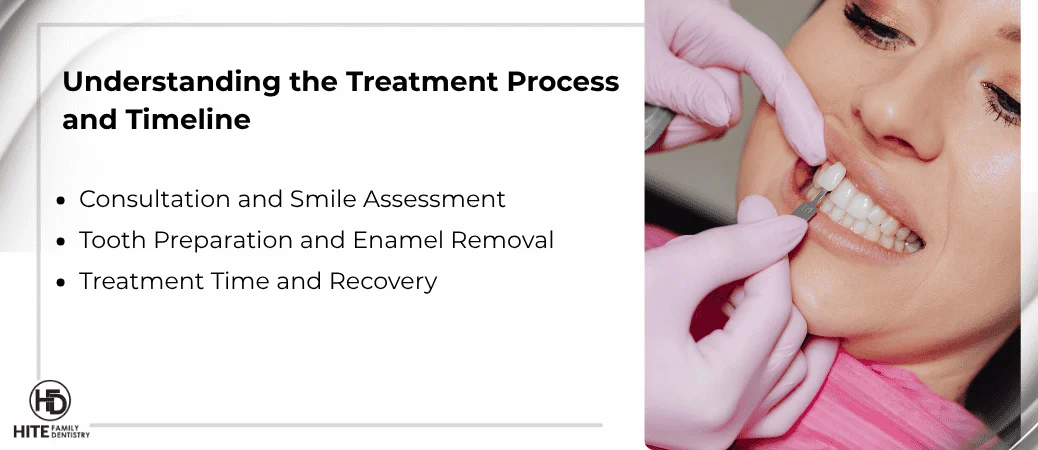
Consultation and Smile Assessment
When you schedule a consultation, your dentist will examine your teeth and discuss what you want to change about your smile.
For veneers alone, this visit focuses on checking if your teeth are healthy enough for the procedure and choosing your veneer shade.
A smile makeover consultation goes deeper. Your dentist takes x-rays, photographs, and digital scans of your teeth. They’ll check for cavities, gum disease, and bite problems that need fixing first.
Many dentists now use digital imaging to show you what your new smile could look like before treatment starts. This helps you decide if you’re happy with the planned results.
The consultation for a comprehensive smile makeover typically takes longer because you’re planning multiple procedures.
Tooth Preparation and Enamel Removal
For veneers, your dentist removes about 0.5mm of enamel from the front of your teeth. This creates room for the thin porcelain shells to fit without making your teeth look bulky.
The tooth preparation usually happens in one appointment and takes about an hour or two.
After enamel removal, your dentist takes impressions of your prepared teeth. You’ll wear temporary veneers while the lab makes your permanent ones.
These temporaries protect your teeth and let you get used to how veneers feel.
A smile makeover involves different preparation steps based on your treatment plan. You might need teeth cleaning, cavity fillings, or gum treatments before any cosmetic work begins.
If you’re getting orthodontics plus veneers, the tooth preparation for veneers happens after your teeth are straightened.
Treatment Time and Recovery
Veneers take two to three visits over about two weeks. Your final appointment involves removing the temporaries and bonding the permanent veneers to your teeth.
You can return to normal activities right away, though your teeth might feel sensitive for a few days.
A smile makeover timeline varies widely based on what you’re having done. Teeth whitening adds one or two sessions.
Orthodontic treatment takes six to eighteen months. Dental implants need three to six months for healing.
Most people complete their smile makeover in stages rather than all at once. Your dentist will create a treatment sequence that addresses urgent problems first, then moves to cosmetic improvements.
You’ll have follow-up visits throughout the process to check your progress and make adjustments.
Aesthetics, Durability, and Long-Term Care
Both veneers and smile makeovers focus on improving how your teeth look and function, but they differ in how long they last and what kind of care they need over time.
Dental Aesthetics and Natural Appearance
Veneers create a uniform look by covering the front of your teeth with thin shells. They can change the color, shape, and size of your smile in one treatment.
When done well, veneers give you a natural-looking smile that matches your facial features.
A smile makeover addresses aesthetics, function, and health at the same time. This broader approach means your results look natural because the treatment considers your entire mouth.
If you need dental crowns for back teeth or gum work before veneers, a smile makeover includes those steps.
The key to dental aesthetics is matching the new work to your face and existing teeth. Your dentist should use photos and smile analysis to plan tooth size, color, and placement that look like they belong in your mouth.
Durability and Longevity
Porcelain veneers typically last 10 to 15 years with proper care. They resist staining better than natural teeth and stay bright over time. Composite veneers usually last 5 to 7 years before needing replacement.
Dental crowns, which might be part of a smile makeover, often last 15 to 20 years. The longevity depends on the material used and where the crown sits in your mouth.
A smile makeover’s durability depends on all the treatments included. When you complete orthodontics before placing veneers, the results last longer because your bite is stable.
Treating gum disease before cosmetic work prevents future problems that could damage your new smile.
Maintaining Your New Smile
You need to brush twice daily and floss once daily to keep veneers and smile makeover results looking good. Regular checkups and routine cleanings every six months help your dentist spot problems early.
Avoid biting hard objects like ice or fingernails. If you grind your teeth at night, wear a nightguard to protect your veneers or crowns from damage.
Daily care for veneers:
- Use a soft-bristled toothbrush
- Choose non-abrasive toothpaste
- Floss gently around the edges
- Limit staining drinks like coffee and red wine
Your dentist may recommend specific products based on what treatments you received. Following these guidelines helps your investment last as long as possible.
Cost, Risks, and Making the Right Choice
Understanding the financial commitment and potential complications helps you choose between these cosmetic options with confidence.
Your budget, oral health status, and willingness to accept certain risks all play a role in determining which path makes sense for your situation.
Budgeting and Value Considerations
A smile makeover’s cost depends on the number of procedures included, the materials used, and any preliminary work your teeth need.
You might pay for orthodontics, whitening, bonding, and veneers all within one comprehensive plan. The total can vary widely based on how many teeth need treatment.
Veneers alone typically cost less than a full smile makeover because you’re paying for one type of procedure. Each veneer usually ranges from a few hundred to over a thousand dollars per tooth.
If you need veneers on six to eight front teeth, that’s more predictable than a makeover involving multiple treatments.
Insurance rarely covers purely cosmetic work. However, if your treatment plan includes medically necessary restorations like crowns for damaged teeth, those portions might qualify for partial coverage.
Ask your dentist for an itemized breakdown so you can submit eligible procedures to your insurance.
Be cautious about overseas dental packages that seem too cheap. Repair costs for complications from dental tourism often exceed what you would have paid locally, sometimes running two to three times the original quote.
Risks and Potential Complications
Both options involve some level of risk, but the extent depends on how much tooth preparation is required. Veneers that need enamel removal create permanent changes to your natural teeth.
Since enamel doesn’t grow back, you’ll need some type of restoration on those teeth for life.
Sensitivity after veneer placement is common and usually temporary. Some patients experience lasting sensitivity if too much enamel was removed during preparation. Conservative preparation techniques reduce this risk.
A smile makeover carries additional risks depending on what procedures are included:
- Orthodontic treatment can cause temporary discomfort and root resorption in rare cases
- Whitening may increase tooth sensitivity for a few days
- Multiple procedures extend your treatment time and increase the chance of complications
Poor planning or rushed treatment can lead to bite problems, aesthetic dissatisfaction, or the need for replacement work.
Choosing between veneers and a comprehensive smile makeover requires understanding which risks you’re willing to accept.
Personalized Smile Solutions

Your specific dental situation determines which treatment makes sense. If you have straight teeth with only minor discoloration or chips, veneers alone might give you exactly what you want.
You’ll save time and money by avoiding unnecessary procedures.
A smile makeover becomes the better choice when you have multiple concerns that one procedure can’t fix.
Crooked teeth, significant gaps, gum issues, and discoloration all together require a coordinated approach. Your dentist should explain why each recommended procedure is necessary for your goals.
Digital smile design helps you preview your results before committing to treatment. This technology lets you see how different combinations of procedures would look on your face.
You can make adjustments to the plan based on what you see rather than hoping for the best.
Treatment time varies significantly between these options. Veneers typically take two to three appointments over a few weeks.
A full smile makeover might span several months if it includes orthodontics or other preliminary work.
Frequently Asked Questions
Smile makeover costs vary widely based on which procedures you need, while results depend on your starting point and treatment plan.
Bonding offers a conservative fix for minor flaws, but veneers aren’t right for everyone and typically need replacement after 10 to 20 years.
How much does a full smile makeover typically cost?
A full smile makeover doesn’t have a single fixed price because every treatment plan is different. Your total cost depends on how many teeth you’re treating, which procedures you need, and what materials your dentist uses.
Several factors determine the final price including the number of units treated, whether you choose porcelain or composite materials, lab quality, and any preliminary work like gum treatment or orthodontics.
If you need aligners to straighten your teeth first, that adds a separate treatment phase and fee.
Most dental insurance doesn’t cover purely cosmetic procedures. However, medically necessary restorative work like a crown on a damaged tooth may qualify for partial coverage.
Ask your dentist for an itemized estimate that breaks down each procedure. This helps you understand exactly what drives your total and lets you submit any qualifying items to your insurance.
What kind of before-and-after results can I expect from a smile makeover?
Your before-and-after results will be unique to you rather than identical to someone else’s outcome. What you can achieve depends on your starting tooth condition, which procedures you choose, and your specific goals.
Digital mock-ups let you preview likely results before you commit to treatment. This technology helps set accurate expectations and reduces the chance you’ll be disappointed with the final look.
Treatment can address various concerns that most patients present with during consultations.
Your dentist should show you real before-and-after photos from actual cases similar to yours, not stock images or celebrity transformations.
Are there any legitimate free or low-cost smile makeover programs near me?
Free or extremely low-cost smile makeover programs are rare because these treatments involve significant time, materials, and expertise.
Some dental schools offer reduced fees when students perform procedures under faculty supervision.
You might find charitable programs that provide care to qualifying individuals based on financial need. However, comprehensive cosmetic makeovers rarely fall under emergency or charitable care criteria.
Be very cautious of overseas packages that seem too cheap. Low-cost dental tourism often involves aggressive tooth preparation, lower-quality materials, and limited follow-up care that can lead to expensive problems later.
How does dental bonding compare to other cosmetic options for fixing chips or gaps?
Dental bonding uses tooth-colored resin to repair chips or close small gaps without removing much natural tooth structure.
It’s more conservative than veneers and costs less, making it a good choice for minor cosmetic fixes.
The main trade-off is durability. Bonding typically lasts a few years before needing touch-ups or replacement, while porcelain veneers can last over a decade.
Bonding is also reversible or repairable in ways that veneers are not. If you only have minor discoloration or small chips, whitening or bonding can often achieve your goals while preserving your natural enamel.
Why do some dentists advise against getting veneers in certain cases?
Some dentists recommend against veneers when less invasive options can achieve the same result. Because traditional veneers require removing enamel that doesn’t grow back, they represent a permanent change to your teeth.
If you have alignment issues, your dentist might suggest orthodontics first. Straightening crowded or crooked teeth before cosmetic work lets you use more conservative restorations and maintain a healthier bite.
Veneers are most appropriate when you’re satisfied with your overall dental structure but want to improve the appearance of specific teeth.
Your dentist should evaluate whether decay, gum disease, or bite problems need treatment before any cosmetic procedures begin.
How long do veneers last, and what usually happens after 20 years?
Well-placed porcelain veneers show survival rates above 90% beyond 10 years according to peer-reviewed research. Long-term studies report survival rates of about 83% to 91% at the 20-year mark.
Fracture is the most common reason veneers fail over time. How long yours last depends on factors like whether you grind your teeth, how much enamel was preserved during placement, and how well you maintain them.
After 20 years, you’ll likely need replacement due to normal wear or changes in your gums and teeth. Ongoing maintenance requirements include daily hygiene, regular dental checkups, and wearing a nightguard if you grind your teeth at night.