


Many older adults wonder if they’ve missed their window for getting permanent tooth replacement options.
Age alone does not disqualify you from dental implants for seniors, and patients over 60 have similar success rates to younger adults.
The good news is that dental implant technology has advanced to address the specific needs of older patients.
Your mouth does change as you age, but these changes don’t mean you can’t enjoy the benefits of dental implants.
Between 1999 and 2020, the rate of adults over 50 getting dental implants jumped from 1.3% to 8.4%. The biggest increase happened among people aged 65 to 74.
Whether you’re dealing with one missing tooth or need multiple replacements, understanding what to expect can help you make the right choice.
Your overall health matters more than the number on your birthday cake when it comes to qualifying for this tooth replacement option.
Key Takeaways
- Age itself is not a barrier to dental implants, with success rates of 97% at 10 years across age groups
- Your overall health and bone density matter more than your age when determining if you’re a good candidate
- Dental implants offer a permanent solution that can last decades with proper care and regular dental visits
Dental Implants: What Makes Them Unique for Seniors?
Dental implants function as artificial tooth roots that integrate with your jawbone, and their use among older adults has grown significantly over the past two decades.
Understanding how they work and how they compare to other options helps you make informed decisions about your oral health.
How Dental Implants Work
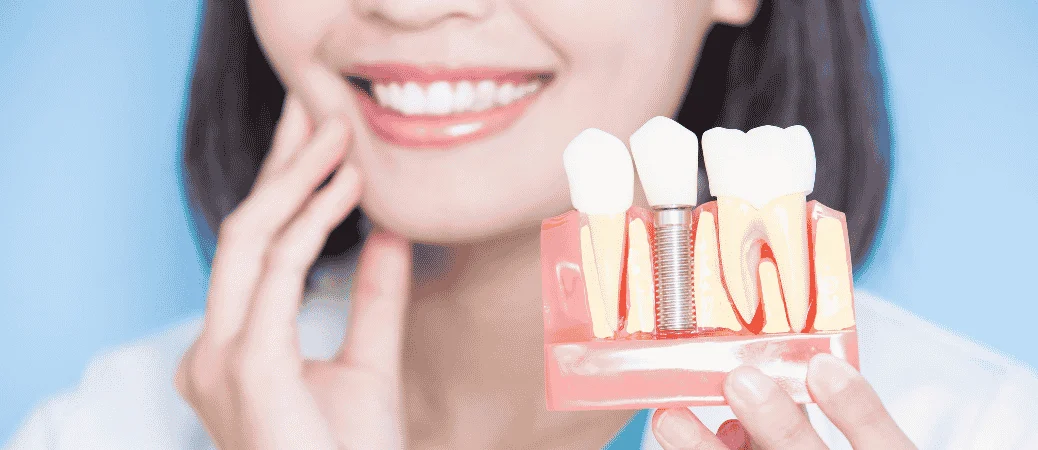
When you get a dental implant, your dental surgeon places a small titanium post into your jawbone. This post acts as an artificial tooth root and becomes the foundation for your replacement tooth.
A connector piece called an abutment sits between the titanium post and the visible tooth. Your dentist creates a custom crown specifically for you, matching the shape of your bite and the color of your surrounding teeth.
Two main types exist: endosteal and subperiosteal implants. Surgeons place endosteal implants directly into your jawbone.
If you have lower jawbone height, you might need subperiosteal implants, which rest on top of the jaw instead.
Tooth Replacement Options
You have several choices for replacing missing teeth. Dentures are removable prosthetics that sit on your gums. Bridges attach to neighboring teeth to fill gaps. Dental implants offer a permanent solution anchored in your jaw.
Unlike dentures, you don’t need to remove implants for cleaning.
They function more like natural teeth when you eat and speak. In most cases, you don’t need to replace dental implants for at least a decade, making them more permanent than dentures.
Implants also help prevent jawbone deterioration and stabilize neighboring teeth. They support your ability to chew food properly and can improve your facial appearance.
Prevalence and Trends in Implant Use Among Older Adults
The use of dental implants among older adults has increased dramatically. Between 1999 and 2020, the rate of getting dental implants in adults over 50 rose from 1.3% to 8.4%.
Research from 2018 showed the largest increase occurred in people between 65 and 74 years old. This growth reflects improved surgical techniques and higher success rates that make implants a viable option for seniors.
By 2050, 1 in 6 people will be over 65 years old. As this population grows, more seniors face oral health challenges like dry mouth, tooth decay, and gum disease that can lead to tooth loss.
Assessing Eligibility and Candidacy After 60
Your actual health matters far more than your age when determining if you qualify for dental implants.
The focus shifts to bone quality, gum condition, and overall medical stability rather than the number on your birthday card.
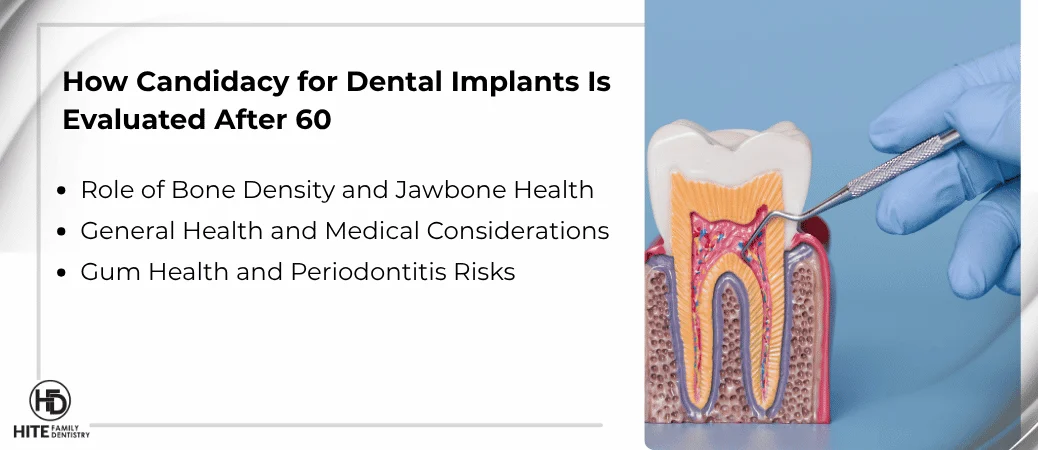
Role of Bone Density and Jawbone Health
Your jawbone density plays a critical role in whether implants will work for you.
The implant needs enough bone to anchor securely and complete a process called osseointegration, where the titanium post fuses with your jawbone.
If you’ve experienced jawbone loss from missing teeth or gum disease, you might need additional procedures first. Your dentist can perform bone grafting to build up areas that lack sufficient density.
This adds time to your treatment but makes implants possible for many people who wouldn’t otherwise qualify.
Modern imaging technology helps your dental team assess your bone health accurately before starting treatment. They’ll measure bone width, height, and quality to determine the best approach.
Some implant designs work better for people with lower bone density, giving you options even if your jawbone has deteriorated over time.
General Health and Medical Considerations
Dental implant candidacy depends on your medical stability rather than chronological age. Your dentist will review your health history and any chronic conditions you manage.
Certain health issues require extra attention. If you have diabetes, you face a higher infection risk during healing. Smokers experience slower recovery times that can affect implant success.
Your doctor may ask you to optimize blood sugar control or quit smoking before proceeding.
Medications also play a role in your eligibility. Blood thinners, bisphosphonates for osteoporosis, and certain cancer treatments can impact healing and osseointegration.
You’ll need to discuss all medications with your dental team to plan safely.
Gum Health and Periodontitis Risks
Your gums must be healthy before you can get implants. Periodontitis, or gum disease, creates an unstable foundation that threatens implant success.
Active gum disease needs treatment first. The infection damages both soft tissue and bone, which are essential for supporting implants. Your dentist will address inflammation and infection before moving forward with implant placement.
Maintaining oral hygiene becomes even more important after you get implants. Poor cleaning habits can lead to peri-implantitis, an infection around the implant similar to gum disease. This condition can cause implant failure if left untreated.
Unsure if implants are right for you in Edwardsville, IL? Contact Hite Family Dentistry today.
Modern Dental Implant Solutions for Seniors
Seniors today have access to advanced implant systems designed specifically for complex cases, including options that work with minimal bone density and solutions that replace multiple teeth at once.
These modern approaches can reduce surgery time, lower costs, and speed up recovery compared to traditional single-tooth implants.
Full Mouth and Full Arch Replacement Options
If you’re missing most or all of your teeth, full mouth dental implants offer a permanent solution that feels and functions like natural teeth.
These systems replace an entire arch of teeth using strategically placed implants as anchors.
Full arch replacement typically requires four to six implants per arch. This approach is more efficient than replacing each tooth individually.
You can get a complete set of upper or lower teeth attached to these implants, creating a stable foundation for eating and speaking.
The full mouth implants process usually takes several months from start to finish. Your dentist will place the implants first, then allow time for them to bond with your jawbone.
Once healed, they’ll attach your permanent teeth to the implants.
Many seniors choose this option because it eliminates the slipping and discomfort associated with traditional dentures. Your new teeth stay firmly in place without adhesives or removal for cleaning.
Innovative Implant Types: Zygomatic, All-on-4, and All-on-6
All-on-4 uses four implants to support a full arch of teeth. This technique angles the back implants to maximize contact with existing bone, which means you may not need bone grafting even if you have some bone loss.
All-on-6 works similarly but uses six implants for additional stability. This option provides extra support and may be better if you have significant bone loss or want maximum durability.
Zygomatic implants anchor into your cheekbone rather than your jaw. About 14% of seniors over 60 with severe bone loss need these advanced solutions.
They’re longer than standard implants and bypass areas where bone density is too low for traditional placement.
These innovative approaches often allow you to receive temporary teeth the same day as your surgery. You won’t need to wait months without teeth while your implants heal.
Implant-Retained Dentures and Bridges
Implant-retained dentures snap onto two to four implants placed in your jaw. Unlike traditional dentures, these stay securely in place while you eat and talk. You can remove them for cleaning, which some seniors prefer.
An implant-supported bridge uses implants on either end to hold replacement teeth in between. This works well when you’re missing three or four teeth in a row. The bridge stays permanently attached to your implants.
Overdentures are another type of implant-supported overdentures that rest on your gums but clip onto implants for stability.
They cost less than fixed tooth replacement options while still providing better security than regular dentures.
These solutions give you more chewing power than traditional dentures. You can eat tougher foods and maintain better nutrition without worrying about your teeth shifting or falling out.
The Dental Implant Journey for Older Adults
Getting dental implants involves several phases that work together to create a stable, lasting tooth replacement.
The process typically spans several months and includes careful planning, surgical placement, and a healing period where your implant bonds with your jawbone.
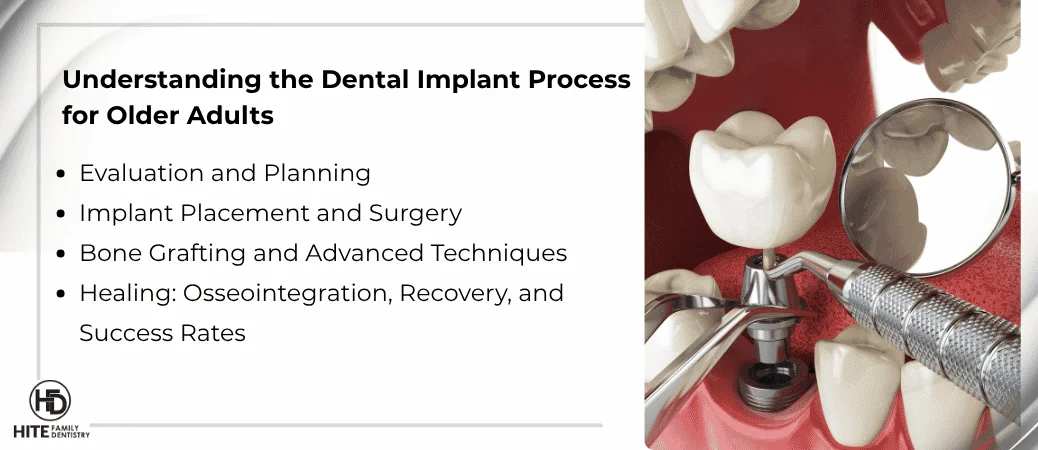
Evaluation and Planning
Your journey starts with a thorough evaluation by your dentist or oral surgeon. They’ll take X-rays and 3D scans of your jaw to check your bone density and structure.
You’ll discuss your medical history, including any conditions like diabetes or medications that might affect healing.
During this phase, your dentist will determine if you need any preparatory work before implant placement. They’ll measure the exact location where each implant will go and create a customized treatment plan.
The evaluation also covers the type of implant that works best for your situation.
You’ll receive a timeline for the entire dental implant procedure and learn what to expect at each stage.
Your dentist will also discuss costs and payment options since dental implant surgery costs can reach $6,000 per tooth without insurance coverage.
Implant Placement and Surgery
The dental implant surgery happens in stages. First, your oral surgeon places a titanium post into your jawbone. This post acts like an artificial tooth root and provides the foundation for your new tooth.
The procedure typically uses local anesthesia, though sedation options are available if you prefer. Your surgeon makes a small opening in your gum to access the jawbone, then carefully drills a space for the implant.
The titanium post gets screwed into place, and the gum tissue is closed over it.
Most people experience minimal discomfort during implant surgery. You can usually return home the same day and resume light activities within a few days.
Bone Grafting and Advanced Techniques
Some older adults need bone grafting before they can receive implants. This happens when your jawbone isn’t thick or strong enough to support the implant on its own.
Bone grafting adds material to your jaw to create a more solid base.
The grafting material can come from your own body, a donor, or synthetic sources. It takes several months for the graft to integrate with your existing bone before implant placement can happen.
If you have lower jawbone height, your dentist might recommend subperiosteal implants instead of standard endosteal implants. These sit on top of the jawbone rather than being embedded directly into it.
Healing: Osseointegration, Recovery, and Success Rates
After implant placement, you enter the healing phase called osseointegration. This is when your jawbone grows around the titanium post and fuses with it. The process usually takes three to six months.
Once osseointegration is complete, your dentist attaches an abutment to the implant. This connector piece holds your final crown in place. After your gums heal around the abutment, your custom-made crown gets attached.
Dental implants have a 97% success rate at 10 years and 75% at 20 years. Implant failure is rare and most often results from infections or poor healing. Following your dentist’s care instructions helps ensure success.
During recovery, you’ll maintain good oral hygiene and attend regular check-ups. Your new implants will help you enjoy better nutrition since they function like natural teeth for chewing.
Costs, Longevity, and Maintaining Your Implants
Dental implants require a significant upfront investment, but they can last decades with proper care.
Understanding the full cost picture, insurance options, and daily maintenance needs helps you make an informed decision about this long-term solution.
Understanding Implant Costs and Insurance
The cost of dental implants varies widely based on where you live and what your treatment involves.
A single tooth implant typically runs between $3,000 and $6,000, including the post, abutment, and crown. Urban areas and major metro regions usually charge more due to higher overhead costs.
Your estimate might not include everything you need. Many dentists quote only the implant post, not the full procedure.
Ask for a complete itemized quote that covers initial imaging, bone grafts if needed, extractions, and follow-up care.
Original Medicare doesn’t cover dental implants in most cases. However, some Medicare Advantage plans include partial coverage for implants.
Check your specific plan to see what dental benefits you have. Private dental insurance often lists implants as covered but may have annual maximums of only $1,000 to $2,000.
You have several payment options. Dental schools offer services at 40% to 60% below private practice rates.
CareCredit provides financing with deferred interest periods. Some dental offices offer their own payment plans too.
Long-Term Maintenance and Oral Hygiene
Your implants need the same daily care as natural teeth. Brush twice daily with a soft-bristled toothbrush and use low-abrasive toothpaste. Floss around your implants every day using unwaxed tape or implant-specific floss.
Regular dental cleanings every six months are essential. Your dentist will check for signs of peri-implantitis, an infection that can threaten implant stability.
Professional cleanings remove plaque and tartar that regular brushing might miss.
Avoid habits that stress your implants. Don’t chew ice, hard candy, or other extremely hard foods.
If you grind your teeth at night, wear a protective nightguard. Smoking significantly increases implant failure risk and slows healing.
With proper care, dental implants can last 25 years or longer. The crown may need replacement after 10 to 15 years due to normal wear, but the implant post itself often lasts a lifetime.
How to Support Dental Implant Success
Good overall health directly affects your implant success. Keep chronic conditions like diabetes well-controlled, as high blood sugar slows healing and increases infection risk. Stay hydrated to support healthy gum tissue around your implants.
Eat a balanced diet rich in calcium and vitamin D to maintain strong jawbone density. Your bone supports the implant, so keeping it healthy is critical. Soft foods during the initial healing period protect your new implants.
Attend all follow-up appointments your dentist schedules. These visits let your provider catch potential problems early before they become serious. Report any pain, looseness, or swelling around your implants immediately.
The benefits of dental implants include improved stability compared to dentures and better preservation of your jawbone.
Taking care of your investment through consistent hygiene and professional monitoring ensures you enjoy these advantages for years to come.
Frequently Asked Questions
Many people over 60 have similar concerns about dental implants, from whether age affects candidacy to how the process differs from other tooth replacement options.
Here are answers to the most common questions seniors ask about getting implants.
Am I too old to get dental implants, and how do I know if I’m a good candidate?
You’re not too old for dental implants. There’s no age limit for getting dental implants, and they work just as well after 60 as they do for younger patients.
Your overall health matters more than your age. Good candidates have adequate jawbone density, healthy gums, and no uncontrolled medical conditions that could interfere with healing.
A study comparing patients over 65 to younger groups found only a 2% failure rate across both age groups over 10 years. Even patients over 80 had successful outcomes, though they experienced slightly more complications.
Your dentist will evaluate your bone health, medical history, and specific needs during a consultation.
If you have conditions like diabetes or smoke regularly, you may face higher risks, but many seniors with these factors still get implants successfully.
How do dental implants compare to dentures in comfort, stability, and daily life?
Dental implants offer much better stability than traditional dentures. They don’t slip or move when you talk or eat because they’re anchored directly into your jawbone.
You can eat a wider variety of foods with implants. Dentures often make it hard to chew tough or crunchy foods, while implants function like natural teeth.
Implants don’t require removal for cleaning overnight. You brush and floss them just like your natural teeth, which many people find more convenient than managing dentures.
Dental implants help prevent jawbone deterioration that naturally occurs after tooth loss. Dentures don’t provide this benefit because they sit on top of your gums rather than stimulating the bone underneath.
The main tradeoff is cost and treatment time. Implants require surgery and several months of healing, while dentures can be fitted much faster and cost significantly less upfront.
What are the main stages of getting dental implants, from consultation to final tooth?
The first stage is your consultation and planning. Your dentist will take X-rays, evaluate your bone health, and discuss whether you need any preparatory procedures like bone grafts.
During the surgical stage, your dentist places a titanium post into your jawbone. This post acts as an artificial tooth root and takes several months to fuse with your bone in a process called osseointegration.
After healing, you’ll return for the abutment placement. This connector piece sits on top of the implant post and will eventually hold your new tooth.
The final stage involves creating and attaching your custom crown. Your dentist carefully matches the color and shape to your existing teeth for a natural appearance.
Does healing or recovery take longer after 60, and what can I expect during the process?
Healing doesn’t necessarily take longer just because you’re over 60. Your overall health and lifestyle habits affect recovery more than your age alone.
The healing process typically takes several months regardless of age. Your jawbone needs this time to fuse properly with the implant post before it can support a permanent tooth.
You might experience some swelling, bruising, and discomfort for the first few days after surgery. Most people manage this with over-the-counter pain medication and ice packs.
Certain health conditions common in older adults can slow healing. Diabetes, poor circulation, and some medications may extend your recovery time, so discuss these with your dentist beforehand.
Following your dentist’s post-surgery instructions carefully makes the biggest difference in healing. This includes eating soft foods, avoiding the implant site when brushing, and attending all follow-up appointments.
What kind of aftercare and maintenance do dental implants need, especially as I get older?
You care for dental implants the same way you care for natural teeth. Brush twice daily and floss once daily to prevent bacteria buildup around the implant.
Regular dental checkups become even more important with implants. Your dentist will check that the implant remains stable and watch for any signs of infection or bone loss around it.
Good oral hygiene prevents peri-implantitis, an infection that can develop around implants. This condition is especially common in people with diabetes or those who struggle to maintain thorough cleaning routines.
Report any looseness, pain, or discomfort to your dentist right away. Early detection of problems makes them easier to fix and helps preserve your implant for the long term.
Your implants should last at least a decade with proper care. Dental implants have a success rate of 97% at 10 years and 75% at 20 years, making them a long-lasting solution.
Should I choose implants, a partial denture, or another option for replacing missing teeth?
The best choice depends on your budget, timeline, and personal preferences. Each option has different advantages and limitations.
Implants cost more upfront but last longer than other options. A single tooth implant can cost up to $6,000 without insurance, while full-mouth implants are significantly more expensive.
Partial dentures cost less and don’t require surgery. They’re a good choice if you need a faster solution or can’t have surgery due to health concerns.
Implants preserve your jawbone and prevent the sunken facial appearance that can develop with dentures over time. This makes them better for long-term oral health and facial structure.
Consider your ability to handle the surgical process and months-long healing period. If you need teeth replaced quickly or have medical conditions that complicate surgery, dentures might be more practical.
Talk with your dentist about your specific situation. They can help you weigh the costs, benefits, and risks of each option based on your oral health, medical history, and lifestyle needs.